mac vu360 service manual pdf

The GE MAC VU360 is a resting ECG analysis system, supported by comprehensive documentation like the V1.01 Service Manual available as a PDF.

Operators manuals, such as Rev E, and resources like oneSOURCE aid in operation and maintenance of this vital cardiac diagnostic tool.

Overview of the MAC VU360

The GE MAC VU360 is a sophisticated resting electrocardiogram (ECG) analysis system designed for efficient cardiac diagnostics. Its functionality includes seamless integration with hospital information systems like MUSE, and the generation of PDF reports.

Access to the MAC VU360 Service Manual, often found as a PDF document (V1.01 is a noted version), is crucial for biomedical technicians. This manual details component-level repairs and troubleshooting, alongside operator’s guides like Rev E, available through platforms like oneSOURCE.

Importance of the Service Manual

The MAC VU360 Service Manual, readily available as a PDF, is indispensable for maintaining optimal performance. It provides detailed block diagrams and component-level repair information, enabling efficient troubleshooting and minimizing downtime.

Accessing resources like Health Care PDF Downloads and oneSOURCE Document Management Services ensures technicians have the latest revisions (like V1.01). Proper utilization, alongside the Operators Manual, guarantees safe and accurate operation of this critical diagnostic equipment.

Understanding the MAC VU360 Components

The MAC VU360 consists of an ECG cart, associated hardware, and sophisticated software for data management, all detailed within the service manual PDF.

ECG Cart and Hardware

The MAC VU360’s mobile cart houses the core hardware, including the ECG amplifier, analog-to-digital converter, and display. Service manual PDFs provide detailed schematics and component layouts for troubleshooting.

Understanding the physical connections and internal wiring, as illustrated in detailed block diagrams within the manual, is crucial for effective repair. Proper hardware functionality is essential for accurate ECG signal acquisition and analysis, as outlined in the documentation.

Software and Data Management

MAC VU360 software handles ECG signal processing, analysis, and report generation. The service manual PDF details software architecture and diagnostic procedures.

Version control is vital; V1.01 specifics are documented. Data management features include integration with systems like MUSE and PDF report creation. Maintaining current software ensures optimal performance and compatibility, as described within the comprehensive service documentation.

Accessing the MAC VU360 Service Manual (PDF)

The MAC VU360 service manual, in PDF format, is accessible through oneSOURCE, Health Care PDF Downloads, and online resources for convenient access.

Online Resources for Manual Download

Finding the MAC VU360 service manual PDF requires utilizing several online platforms. oneSOURCEdocs.com provides access with registration or login, offering a centralized document management service for GE Healthcare products.

Additionally, various healthcare-focused websites host these manuals, ensuring technicians and biomedical engineers can readily download the V1.01 service manual and related operator guides like Rev E for efficient troubleshooting and maintenance.

oneSOURCE Document Management Services

oneSOURCE, a RLDatix service, is a key repository for GE Healthcare documentation, including the MAC VU360 service manuals. Accessing the MAC VU360 Resting ECG Analysis System V1.01 Service Manual PDF requires a user account—either through sign-up or login.

This platform streamlines document retrieval, offering a centralized and organized approach to managing technical resources for biomedical professionals and technicians.

Health Care PDF Downloads

Various online sources offer the MAC VU360 Resting ECG Analysis System V1.01 Service Manual as a PDF download. These resources provide convenient access to detailed technical information for servicing the system.

Users can find the manual available for free download, often presented alongside other healthcare documentation, facilitating efficient troubleshooting and maintenance procedures for biomedical engineers.

Troubleshooting Common Issues

The MAC VU360 service manual (PDF) assists in resolving power supply and ECG waveform quality problems, offering detailed diagnostic guidance.

Power Supply and Startup Problems

The GE MAC VU360 service manual (PDF) is crucial when encountering startup failures or power issues. It provides schematics and troubleshooting steps for the internal power supply components.

Technicians can utilize the manual to diagnose faulty fuses, power connectors, or the main power board itself. Detailed block diagrams within the manual aid in tracing power distribution pathways.

Component-level repair information assists in identifying and replacing defective parts, restoring system functionality efficiently.

ECG Waveform Quality Issues

The MAC VU360 service manual (PDF) offers guidance for resolving poor ECG waveform quality. It details troubleshooting steps for signal interference, noise, and baseline wander.

Technicians can reference the manual’s diagrams to check cable connections, electrode integrity, and internal amplifier circuits.

Calibration procedures, outlined in the manual, ensure accurate signal acquisition. Component-level repair information assists in fixing faulty analog front-end components impacting waveform fidelity;

Preventative Maintenance Procedures

The MAC VU360 service manual (PDF) details regular cleaning, inspection, and calibration routines.

Following these procedures ensures optimal performance and longevity of the ECG system, as outlined within the document.

Regular Cleaning and Inspection

The MAC VU360 service manual (PDF) emphasizes routine cleaning of the ECG cart and hardware components. Inspect cables for damage, ensuring secure connections.

Verify the ECG waveform quality and check for any physical defects. Regularly examine the system for dust accumulation and promptly address any identified issues to maintain optimal functionality and patient safety. Consistent inspection, guided by the manual, is crucial.

Calibration and Verification

The MAC VU360 service manual (PDF) details specific calibration procedures to ensure accurate ECG readings. Regular verification of the system’s performance against established standards is vital.

This includes checking gain, frequency response, and other critical parameters. Following the manual’s guidelines guarantees reliable data output and supports effective cardiac diagnosis. Proper calibration maintains the system’s precision and clinical validity.

Software Updates and Version Control

The MAC VU360 relies on software updates; V1.01 Service Manual details these. Keeping software current, as outlined in the PDF, is crucial for optimal performance.

V1.01 Service Manual Details

The MAC VU360 Resting ECG Analysis System V1.01 Service Manual, accessible as a PDF file, provides in-depth technical information for qualified service personnel.

This document details component-level repair procedures, block diagrams, and troubleshooting guides essential for maintaining the system’s functionality.

It’s a critical resource for understanding the internal workings of the MAC VU360, enabling effective diagnostics and repairs, ensuring accurate ECG readings and patient safety.

Importance of Keeping Software Current

Maintaining up-to-date software on the GE MAC VU360 is crucial for optimal performance and data security. Newer versions often include bug fixes, enhanced algorithms for improved ECG analysis, and compatibility updates.

Referencing the MAC VU360 service manual PDF helps understand software update procedures.

Regular updates ensure accurate diagnoses, seamless integration with systems like MUSE, and adherence to current healthcare standards.

Integration with ECG Information Systems

The MAC VU360 seamlessly integrates with ECG information systems like MUSE, enabling efficient data transfer and PDF report generation.

MUSE Integration

The GE MAC VU360 demonstrates robust integration capabilities with the MUSE cardiovascular information system. This connectivity allows for streamlined downloading of patient demographics and orders directly into the ECG analysis system.

Consequently, technicians can efficiently manage patient data and minimize manual entry errors. Accessing the MAC VU360 service manual (PDF) provides detailed instructions on configuring and troubleshooting this crucial MUSE integration, ensuring optimal workflow and data accuracy.

PDF Report Generation

The MAC VU360 system excels in generating comprehensive ECG reports in PDF format. This functionality facilitates easy storage, retrieval, and sharing of patient data with other healthcare professionals.

Detailed instructions regarding report customization and troubleshooting PDF creation issues are available within the MAC VU360 service manual (PDF). Proper utilization of this feature ensures seamless integration into existing electronic health record systems.

Comparison with Similar Systems

The MAC VU360 shares technological similarities with the ELI 380, particularly in order downloading and PDF report support, as detailed in available manuals.

MAC VU360 vs. ELI 380

Both the GE MAC VU360 and ELI 380 systems excel in resting ECG analysis, featuring comparable capabilities for integrating with central cardiovascular information systems like MUSE.

Crucially, both support PDF report generation, streamlining workflow. Accessing the MAC VU360 service manual (PDF) provides detailed insights into its specific functionalities and maintenance procedures, while similar documentation exists for the ELI 380, allowing for comparative analysis of their technical specifications and repair processes.

Webinar Resources and Best Practices

GE offers troubleshooting webinars for the MAC VU360, complementing the service manual (PDF). The HTM Association for Ohio provides valuable virtual education.

GE Troubleshooting Webinar

GE hosts dedicated, hour-long webinars focused on best practices and troubleshooting techniques specifically for the MAC VU360 EKG cart. These sessions are invaluable for biomedical technicians seeking to enhance their expertise.

While the MAC VU360 service manual (PDF) provides detailed repair information, the webinar offers a dynamic, interactive learning experience. It complements the manual, addressing common issues and offering practical solutions directly from GE experts.

HTM Association for Ohio Resources

The HTM Association for Ohio actively provides virtual educational opportunities for the biomedical field, including sessions dedicated to the GE MAC VU360. These resources supplement the MAC VU360 service manual (PDF), offering practical insights.

Access to these webinars, alongside the detailed documentation, empowers technicians to effectively maintain and troubleshoot the system. The association’s commitment to education enhances the quality of cardiac care within Ohio and beyond;

Safety Precautions and Regulatory Compliance

Electrical safety is paramount when servicing the MAC VU360; adhere to biomedical equipment standards. Consult the service manual (PDF) for guidance.

Electrical Safety

Prior to any service on the GE MAC VU360, always disconnect the unit from the mains power supply. The service manual (PDF) details proper grounding procedures and insulation testing.

Qualified personnel should verify the integrity of power cords and connectors. Be aware of potential shock hazards when accessing internal components. Follow all relevant biomedical equipment standards and local electrical codes to ensure patient and technician safety during maintenance and repair.

Biomedical Equipment Standards

The MAC VU360, as a medical device, must adhere to stringent biomedical equipment standards. The service manual (PDF) references compliance with relevant regulations for safety and performance.

Regular inspections, as outlined in the manual, ensure continued adherence to these standards. Proper calibration and verification procedures are crucial for accurate ECG readings. Compliance is essential for patient safety and regulatory requirements within healthcare facilities.

Operators Manual Information

The MAC VU360 utilizes the KISS Multilead System, detailed in Operators Manual Rev E (PDF), alongside the broader system documentation and service manual.

MAC VU360 and KISS Multilead System Operators Manual Rev E

The MAC VU360 and KISS Multilead System Operators Manual Rev E, a 44-page PDF document (2.94 MB), published in January 2020 (document number 2088531-004E), provides essential guidance.

This manual details operation of the system, complementing the broader MAC VU360 service manual and resources like oneSOURCE. It’s crucial for understanding workflows and ensuring accurate ECG acquisition and analysis, alongside proper patient data handling.

Service Manual Specifics

The MAC VU360 V1.01 Service Manual (PDF) contains detailed block diagrams and component-level repair information for effective troubleshooting and maintenance.

Detailed Block Diagrams

The GE MAC VU360 service manual’s strength lies in its comprehensive detailed block diagrams. These schematics visually represent the system’s internal functionality, tracing signal paths from input to output.

PDF versions allow for easy zooming and referencing during repair procedures. Technicians can quickly identify signal flow, pinpoint potential fault locations, and understand interconnections between various system components.

These diagrams are crucial for efficient troubleshooting and component-level repairs.

Component Level Repair Information

The MAC VU360 service manual (PDF) provides invaluable component-level repair information, enabling skilled technicians to address failures beyond board-level replacements.

Detailed schematics, parts lists, and troubleshooting guides facilitate precise identification of faulty components – resistors, capacitors, ICs, and more.

This granular detail minimizes downtime and repair costs, extending the system’s lifespan and ensuring continued reliable performance.

Resources for Parts and Repair

MedWrench is a valuable community for MAC VU360 parts and repair discussions, complementing the service manual PDF for effective maintenance.

MedWrench Community

MedWrench serves as a robust online platform dedicated to biomedical equipment professionals, offering a focused space for GE MAC VU360 discussions. Users actively share experiences, troubleshooting tips, and insights related to the service manual PDF.

This community facilitates locating parts, accessing repair information, and connecting with peers facing similar challenges, enhancing the utilization of the MAC VU360’s documentation.

manual toro recycler parts diagram

This manual serves as your guide to successfully operating and maintaining your Toro Recycler, ensuring peak performance and longevity of your machine․

Congratulations on acquiring a Toro 22 Inch Recycler! This resource will help you understand and maximize the benefits of your new product, offering detailed insights․

What is a Toro Recycler?

The Toro Recycler represents a significant advancement in lawn mowing technology, designed for homeowners seeking a beautifully manicured lawn with minimal effort․ These mowers are renowned for their innovative mulching capabilities, effectively chopping grass clippings into fine particles and returning them to the lawn as a natural fertilizer․

Unlike traditional mowers that simply discharge clippings, the Recycler’s system promotes healthier grass growth and reduces the need for chemical fertilizers․ Toro Recycler mowers come in various sizes and power options, including both gas and electric models, catering to diverse lawn sizes and user preferences․

Understanding the specific model you own is crucial for accurate parts identification and maintenance, as detailed within this manual․ The Recycler’s design prioritizes both performance and environmental responsibility, making it a popular choice for eco-conscious homeowners․

Importance of a Parts Diagram

A comprehensive parts diagram is absolutely essential for anyone undertaking maintenance, repair, or restoration of a Toro Recycler mower․ It serves as a visual blueprint, clearly illustrating the relationship between each component and facilitating accurate identification of necessary replacement parts․

Without a diagram, even simple repairs can become frustrating and time-consuming, potentially leading to incorrect part orders or improper assembly․ This manual’s diagrams ensure you can confidently locate and replace worn or damaged components, extending the lifespan of your mower․

Furthermore, a parts diagram aids in understanding the mower’s internal workings, empowering you to diagnose issues more effectively․ Proper use of the diagram minimizes downtime and maximizes the value of your Toro Recycler, ensuring years of reliable service․

Understanding the Diagram

This section details key components, diagram conventions, and symbols used throughout this manual, enabling precise identification of parts for your Toro Recycler․

Key Components Identified

The Toro Recycler parts diagram meticulously illustrates crucial components for effective maintenance and repair․ Key areas include the engine assembly, showcasing the carburetor, spark plug, and fuel lines – vital for combustion and power․ The cutting deck is broken down, highlighting the blade, deck wheels, and height adjusters, essential for a clean and precise cut․

Furthermore, the diagram clearly identifies parts within the drive system, such as the wheels, tires, transmission, and drive belt, responsible for propelling the mower․ Each component is labeled with a unique identifier, cross-referenced with a detailed parts list․ Understanding these key areas allows for targeted troubleshooting and efficient replacement of worn or damaged parts, maximizing the lifespan and performance of your Toro Recycler․

Diagram Conventions & Symbols

Toro Recycler parts diagrams employ standardized conventions for clarity and ease of use․ Parts are typically represented with exploded views, showcasing their relative positions and assembly order․ Numerical identifiers correspond to a comprehensive parts list, detailing each component’s name and part number․

Symbols indicate specific features, such as torque specifications (often in ft-lbs), fastener types (bolts, screws, nuts), and directional arrows for assembly․ Shaded areas may denote recommended lubrication points․ Pay close attention to any notes or cautions accompanying the diagram, as these provide crucial information regarding installation or potential issues․ Familiarizing yourself with these conventions ensures accurate interpretation and successful repairs, preventing misidentification and improper assembly․

Locating Your Specific Model

Accurate identification of your Toro Recycler model is paramount for accessing the correct parts diagram․ The model and serial number are typically located on a decal affixed to the mower’s deck, often underneath the operator control panel or near the engine․ Refer to your owner’s manual for the precise location specific to your unit․

Once you have this information, navigate to Toro’s official website or a trusted third-party parts retailer․ Utilize the search function, entering your model and serial number to filter results․ Selecting the correct model ensures that the displayed diagram accurately reflects your mower’s configuration, preventing the use of incompatible parts and simplifying the repair process․ Double-check the diagram against your mower before ordering any components․

Common Toro Recycler Parts

Essential components include engine parts, cutting deck assemblies, and drive system elements – all crucial for maintaining optimal performance and functionality․

Engine Parts

The engine is the heart of your Toro Recycler, and understanding its components is vital for maintenance and repair․ Key parts include the carburetor, responsible for mixing air and fuel for combustion, and the complete fuel system ensuring a consistent supply․ Regular inspection and cleaning of the carburetor are often necessary for smooth operation․

Furthermore, the spark plug and ignition system initiate the combustion process; a faulty spark plug can lead to starting difficulties or reduced power․ Maintaining proper spark plug gap and replacing it periodically are essential․ These engine components work in harmony, and a parts diagram is invaluable when diagnosing issues or performing replacements, ensuring you select the correct parts for your specific Toro Recycler model․

Carburetor & Fuel System

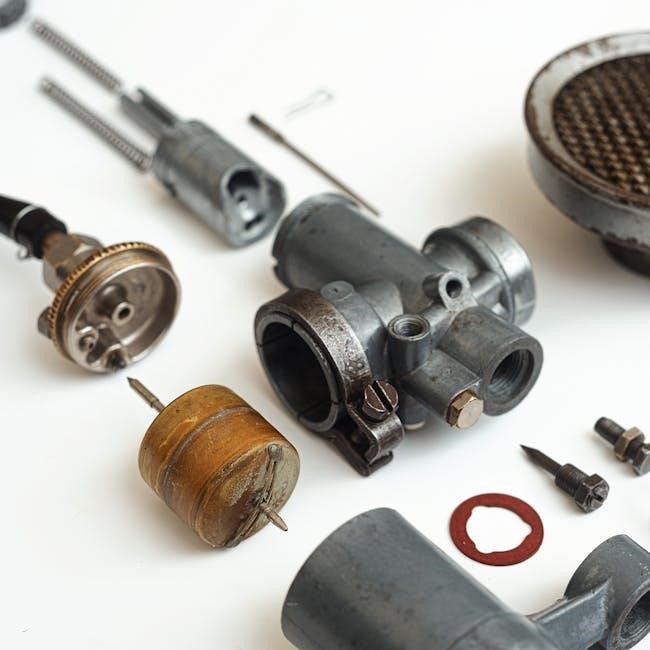
The carburetor meticulously mixes air and fuel in the correct proportions for optimal engine combustion, directly impacting performance․ A clogged carburetor is a common issue, often resulting in hard starting, rough idling, or reduced power․ The fuel system, encompassing the fuel tank, fuel lines, and fuel filter, delivers this mixture consistently․

Regularly inspect the fuel filter for obstructions and replace it as needed to prevent fuel starvation․ When disassembling the carburetor for cleaning, a parts diagram is crucial for correctly reassembling all components – jets, needles, and floats – ensuring proper function․ Understanding this system, aided by a detailed diagram, allows for effective troubleshooting and repair, restoring your Toro Recycler’s engine to peak efficiency․

Spark Plug & Ignition

The spark plug initiates the combustion process within the engine cylinder, requiring precise timing and a strong spark for efficient operation․ A faulty spark plug can cause misfires, leading to reduced power and increased fuel consumption․ The ignition system, including the ignition coil and magneto, provides the high-voltage electricity needed to create this spark․

A parts diagram is invaluable when replacing or inspecting these components, illustrating the correct placement of wires and ensuring proper connections․ Regularly check the spark plug’s condition – look for fouling, wear, or damage․ Utilizing the diagram during reassembly guarantees the ignition system functions flawlessly, contributing to reliable starting and consistent engine performance in your Toro Recycler․

Cutting Deck Parts

The cutting deck is fundamental to the Toro Recycler’s performance, housing the blade and influencing the quality of the cut․ A detailed parts diagram is crucial for identifying each component, from the blade spindle to the deck shell itself․ Understanding the arrangement of these parts simplifies maintenance and repair procedures, ensuring a clean and even cut every time․

Proper maintenance of the deck prevents premature wear and tear, extending the life of your mower․ The diagram assists in locating and replacing worn or damaged parts, such as blades, baffles, and anti-scalp wheels․ Accurate identification through the diagram ensures compatibility and a secure fit, maintaining the deck’s structural integrity and optimal cutting efficiency․

Blade Assembly

The blade assembly is the core of the cutting system, directly impacting the lawn’s appearance․ A Toro Recycler parts diagram meticulously illustrates each component – the blade itself, blade adapter, blade bolt, and retaining cap․ Correctly identifying these parts is vital for safe and effective blade replacement or sharpening, preventing damage to the mower and ensuring a clean cut․

Regular inspection of the blade assembly is crucial for safety and performance․ The diagram aids in pinpointing wear or damage, like bent blades or stripped bolts․ Utilizing the correct replacement parts, as indicated in the diagram, guarantees a secure and balanced assembly, minimizing vibration and maximizing cutting efficiency․ Always prioritize safety when working with blades!

Deck Wheels & Adjusters

The Toro Recycler’s deck wheels and adjusters are essential for smooth operation and achieving the desired cutting height․ A detailed parts diagram showcases each wheel, its associated hardware (bolts, washers, and pins), and the height adjustment mechanism․ Understanding this assembly allows for easy wheel replacement if damaged, or adjustment of the cutting deck to suit varying grass lengths․

Properly functioning deck wheels ensure even cutting across the lawn, preventing scalping and promoting healthy grass growth․ The diagram helps identify worn or seized wheels, and the adjustment mechanism ensures consistent height settings․ Referencing the diagram during maintenance guarantees correct reassembly and optimal performance, contributing to a beautifully manicured lawn․

Drive System Parts

The Toro Recycler’s drive system, illustrated in the parts diagram, is crucial for self-propelled movement․ Key components include the wheels and tires, transmission, and drive belt․ The diagram meticulously details each part, including tire specifications, belt routing, and transmission assembly․ This visual guide simplifies identifying worn or damaged components, enabling efficient repairs and minimizing downtime․

Understanding the drive system allows for troubleshooting issues like loss of traction or difficulty propelling the mower․ The diagram clarifies belt tension adjustments and transmission servicing procedures․ Correctly identifying and replacing these parts, guided by the diagram, ensures smooth, reliable operation and extends the lifespan of your Toro Recycler, providing years of effortless lawn care․

Wheels & Tires

The Toro Recycler’s wheels and tires are vital for maneuverability and traction, clearly depicted within the parts diagram․ The diagram showcases detailed views of each wheel assembly, including bearings, hubs, and tire specifications – size, ply rating, and tread pattern․ Identifying the correct tire replacement is simplified, ensuring optimal performance on various terrains․

Proper wheel maintenance, guided by the diagram, involves checking tire pressure, inspecting for wear and tear, and ensuring secure attachment to the axles․ The diagram illustrates the correct torque specifications for wheel lug nuts, preventing loosening during operation․ Replacing worn tires restores traction and prevents damage to the mower deck, contributing to a smoother, more efficient mowing experience․

Transmission & Drive Belt

The transmission and drive belt system, crucial for self-propelled models, is thoroughly illustrated in the Toro Recycler parts diagram․ Detailed exploded views reveal the arrangement of gears, pulleys, and the drive belt itself, aiding in understanding power transfer from the engine to the wheels․ Identifying belt routing and tensioning points is straightforward, essential for correct installation and optimal performance․

Diagrams highlight specific belt types and sizes, ensuring accurate replacements․ Troubleshooting drive issues, such as slippage or lack of forward motion, becomes easier with visual guidance․ The diagram clarifies the location of the transmission components, facilitating repairs or adjustments․ Maintaining proper belt tension, as shown, prevents premature wear and ensures efficient power delivery during operation․

Troubleshooting with the Diagram

Utilize the diagram to pinpoint faulty components swiftly and accurately, streamlining the repair process and minimizing downtime for your Toro Recycler․

Identifying Faulty Parts

The parts diagram is invaluable when diagnosing issues with your Toro Recycler․ Begin by carefully observing the symptoms – is the engine failing to start, is the blade not engaging, or is the drive system malfunctioning? Once you’ve noted the problem, consult the diagram to locate the corresponding components․

Compare the diagram’s depiction of a healthy part with the actual part on your machine; Look for visible signs of damage, such as cracks, breaks, or wear․ If a part appears damaged, it’s likely the source of the problem․ Trace fuel lines for blockages, check belts for fraying, and inspect blades for dullness or bending․

Remember to reference the diagram’s part numbers to ensure you’re examining the correct component․ A systematic approach, guided by the diagram, will significantly reduce troubleshooting time and ensure accurate repairs․

Using the Diagram for Repair

Once a faulty part is identified using the diagram, the next step is repair or replacement․ The diagram isn’t just for identification; it illustrates how components fit together, crucial for reassembly․ Note the orientation of parts, the placement of washers and bolts, and the routing of cables or linkages․

Before disassembly, it’s helpful to take photos as a visual reference․ When ordering replacement parts, use the diagram’s part numbers to guarantee compatibility․ During reassembly, refer to the diagram frequently to ensure correct placement and secure fastening․

Don’t force components; if something doesn’t fit easily, double-check the diagram․ A properly utilized diagram minimizes errors, streamlines the repair process, and restores your Toro Recycler to optimal working condition․

Where to Find Diagrams & Parts

Access official diagrams and genuine parts through Toro’s website or authorized third-party retailers, ensuring compatibility and quality for your Recycler model․

Toro’s Official Website

Toro’s official website is the premier destination for locating comprehensive parts diagrams and authentic replacement parts specifically tailored to your Toro Recycler model․ Navigating the site is straightforward; typically, you’ll begin by entering your mower’s serial number, ensuring you access diagrams relevant to your exact machine configuration․

Once your model is identified, you’ll gain access to exploded-view diagrams illustrating every component, from the engine and cutting deck to the drive system and beyond․ These diagrams are often interactive, allowing you to click on individual parts to view their part numbers, descriptions, and current availability․

Furthermore, Toro’s website provides a secure online ordering system, enabling you to purchase parts directly from the manufacturer, guaranteeing genuine Toro quality and compatibility․ Detailed user manuals are also frequently available for download, offering additional support for maintenance and repair procedures․

Third-Party Parts Retailers

Numerous third-party retailers specialize in outdoor power equipment parts, offering a convenient alternative to Toro’s official website for sourcing Toro Recycler components․ These retailers often maintain extensive inventories and may provide competitive pricing, potentially saving you money on essential parts․ Popular options include online marketplaces and dedicated lawn mower parts suppliers․

When utilizing these retailers, it’s crucial to verify part compatibility by cross-referencing the part number with your Toro Recycler’s parts diagram or owner’s manual․ Ensure the retailer has a clear return policy in case of incorrect fitment or defects․

While offering convenience and potential cost savings, be mindful of part quality; opting for reputable retailers with positive customer reviews can mitigate the risk of receiving substandard or counterfeit components․ Always prioritize genuine or OEM-approved parts whenever possible for optimal performance and durability․

Safety Precautions

Always disconnect the spark plug wire before any maintenance to prevent accidental starting․ Utilize appropriate tools and wear safety glasses during repairs for protection․

Disconnecting the Spark Plug

Prior to performing any maintenance or repairs on your Toro Recycler, disconnecting the spark plug is a crucial safety step․ This simple action prevents the engine from accidentally starting during your work, significantly reducing the risk of injury․ Locate the spark plug, typically positioned on the engine block․ Carefully grasp the spark plug boot – the rubber covering – and firmly pull it straight off the spark plug․

Avoid pulling on the wire itself, as this can damage it․ Once disconnected, secure the wire away from the spark plug to ensure it cannot accidentally reconnect․ A bent paperclip or similar object can be used to temporarily hold the wire clear․ Remember to reconnect the spark plug boot securely after completing your maintenance, ensuring a snug fit for proper engine operation․ Always double-check before starting the mower․

Proper Tool Usage

Employing the correct tools is paramount when servicing your Toro Recycler, safeguarding both your safety and the integrity of the machine․ Utilizing inappropriate tools can lead to damaged components, ineffective repairs, and potential injury․ Always refer to the parts diagram and service manual to identify the specific tools required for each task․

Invest in quality wrenches, sockets, screwdrivers, and pliers that fit the fasteners on your mower precisely․ Avoid using makeshift tools or applying excessive force, as this can strip threads or break parts․ Wear appropriate safety gear, including gloves and eye protection, when handling tools․ Remember, a well-equipped toolbox and a mindful approach contribute significantly to successful and safe repairs․

what is a lab manual

What is a Lab Manual? A Comprehensive Guide

Lab manuals are essential guides offering detailed instructions for experiments, ensuring safety and effectiveness in labs, be they educational or research focused.

These documents, sometimes called test guides or user worksheets, direct users through interface exploration with minimal prior software knowledge.

A lab manual clarifies laboratory procedures, protocols, and proper conduct, familiarizing users with facilities, equipment, and measurement tools.

Definition of a Lab Manual

A lab manual is fundamentally a comprehensive, meticulously crafted document designed to serve as a practical guide within laboratory environments. It’s more than just a collection of instructions; it’s a detailed roadmap for conducting experiments safely, accurately, and effectively. Often referred to as a test guide or user worksheet in usability testing contexts, the core purpose remains consistent: to provide clear, step-by-step directions.

This document clarifies precisely what needs to be done in a laboratory setting, encompassing everything from the specific protocols to be followed, to the expected laboratory decorum. It’s a resource that ensures consistency and reproducibility in experimental procedures. A well-defined lab manual isn’t simply descriptive; it actively facilitates learning and skill development, particularly for students becoming acquainted with laboratory facilities, apparatus, chemicals, and measurement tools.

Essentially, it’s a formalized record of how work is performed, promoting standardized practices and minimizing errors.

Purpose and Importance of Lab Manuals

The primary purpose of a lab manual extends far beyond simply listing experimental steps. It’s a cornerstone of safety, providing crucial guidance and training to all personnel involved. A well-structured manual documents procedures with clarity, ensuring every technician understands and consistently applies the correct methods. This documentation is vital for maintaining experimental integrity and reproducibility.

Importantly, a lab manual serves as a written record of inherent risks associated with each procedure, enabling proactive hazard mitigation. It facilitates a standardized approach, minimizing errors and promoting efficient workflow. For educational settings, manuals actively assist students in familiarizing themselves with laboratory resources – equipment, chemicals, and techniques.

Ultimately, the manual’s importance lies in its ability to ensure quality, safety, and reliable results, forming a critical component of any successful laboratory operation.

Historical Development of Lab Manuals

The evolution of lab manuals mirrors the progression of scientific methodology itself. Initially, laboratory practices were often passed down orally or through informal notes, lacking standardized documentation. As scientific inquiry became more rigorous, the need for detailed, written records grew apparent. Early forms of lab guides emerged in the 19th century, primarily as notebooks maintained by individual researchers.

The late 19th and early 20th centuries witnessed the formalization of laboratory instruction in educational institutions, driving the development of more structured manuals. These early manuals focused on practical skills and basic experimental techniques.

Post-World War II, with the expansion of scientific research and industry, lab manuals became increasingly sophisticated, incorporating safety protocols, quality control measures, and detailed analytical procedures. Today, digital formats and online accessibility are transforming lab manuals, enhancing their usability and collaborative potential.

Key Components of a Lab Manual

Lab manuals integrate vital elements: safety guidelines, step-by-step experiment procedures, comprehensive materials lists, and dedicated sections for meticulous data collection and insightful analysis.

Safety Guidelines and Protocols

Safety is paramount within any laboratory environment, and a comprehensive lab manual dedicates significant attention to establishing clear guidelines and protocols. These sections meticulously detail potential hazards associated with specific experiments, outlining necessary precautions to mitigate risks.

Protocols cover appropriate personal protective equipment (PPE) – such as gloves, goggles, and lab coats – and their correct usage. Emergency procedures, including first aid protocols and evacuation plans, are clearly defined and readily accessible.

The manual emphasizes proper handling and disposal of chemicals, biological materials, and waste products, adhering to relevant regulations. It also addresses safe operation of laboratory equipment, including specific instructions and warnings. A well-defined safety section ensures technicians receive adequate training and a documented record of inherent risks, fostering a secure working environment.

Experiment Procedures – Step-by-Step Instructions

A core function of a lab manual is to provide detailed, step-by-step instructions for each experiment. These procedures are designed to ensure consistency and reproducibility of results, guiding users through each stage of the process with clarity.

Each step is typically numbered and described in a concise, unambiguous manner, minimizing the potential for errors. The manual often includes diagrams or illustrations to visually demonstrate techniques and equipment setup.

Critical parameters, such as reagent concentrations, incubation times, and temperature settings, are precisely specified. Expected observations and potential troubleshooting tips are also included, assisting users in addressing unforeseen challenges. By meticulously documenting procedures, the lab manual serves as a reliable reference, promoting accurate and efficient experimentation.

Materials and Equipment Lists

A comprehensive lab manual invariably includes detailed lists of all materials and equipment required for each experiment. These lists are crucial for preparation, ensuring that everything needed is readily available before commencing work.

Materials are typically categorized – for example, chemicals, reagents, consumables – and specified with precise quantities and concentrations. Equipment lists detail the necessary apparatus, including specific models or specifications where relevant.

Often, these lists will also indicate where to locate the items within the laboratory. This meticulous approach minimizes delays and prevents interruptions during experiments. Accurate material and equipment lists contribute significantly to the smooth execution of procedures and the reliability of experimental outcomes, fostering a well-organized lab environment.

Data Collection and Analysis Sections

Effective lab manuals dedicate significant space to guiding data collection and analysis. These sections outline precisely what data must be recorded during each experiment, often including pre-formatted tables or templates for organized recording.

Beyond collection, manuals detail how to analyze the gathered data. This may involve specific calculations, statistical methods, or graphing techniques. Clear instructions are provided to ensure consistent and accurate interpretation of results.

Furthermore, these sections often include prompts for observations, error analysis, and potential sources of uncertainty. By standardizing data handling, lab manuals promote reproducibility and facilitate meaningful comparisons between experiments and across different researchers, ultimately strengthening scientific validity.

Types of Lab Manuals

Lab manuals vary by application, encompassing educational guides for students, detailed research manuals for scientists, and specialized versions for clinical or environmental industries.

Educational Lab Manuals (for Students)

Educational lab manuals are specifically designed to support student learning in laboratory settings, providing a structured approach to scientific exploration. These manuals typically include introductory material explaining fundamental concepts, followed by detailed, step-by-step experiment procedures.

A key feature is the emphasis on safety guidelines and protocols, ensuring students understand and adhere to safe laboratory practices. They often incorporate pre-lab questions to assess prior knowledge, data collection sections for recording observations, and post-lab questions to encourage analysis and critical thinking.

These manuals aim to familiarize students with laboratory equipment, techniques, and data analysis methods, fostering a deeper understanding of scientific principles. They bridge the gap between theoretical knowledge and practical application, enabling students to develop essential scientific skills and build confidence in their abilities.

Research Lab Manuals (for Researchers)

Research lab manuals serve as comprehensive guides for researchers, detailing standardized protocols and procedures to ensure consistency and reproducibility in experimental work. Unlike educational manuals, these documents often assume a higher level of prior knowledge and focus on complex methodologies.

They meticulously document experimental setups, data collection techniques, and analytical methods, often including detailed troubleshooting guides and quality control measures. A primary function is to maintain rigorous documentation of all procedures, facilitating peer review and validation of research findings.

These manuals are crucial for training new researchers and ensuring adherence to established protocols within a lab. They also play a vital role in maintaining data integrity and complying with regulatory requirements, supporting the reliability and validity of scientific discoveries.

Industry-Specific Lab Manuals (e.g;, Clinical, Environmental)

Industry-specific lab manuals are tailored guides designed for specialized laboratory settings, such as clinical diagnostics or environmental testing. These manuals go beyond general procedures, incorporating regulations, standards, and best practices unique to each field.

Clinical lab manuals, for example, detail specific protocols for analyzing patient samples, adhering to strict quality control and safety guidelines mandated by regulatory bodies. Environmental lab manuals focus on sample collection, analysis, and reporting procedures compliant with environmental protection standards.

These manuals often include detailed information on instrument calibration, quality assurance, and proficiency testing. They ensure accurate and reliable results, crucial for patient care, environmental monitoring, and regulatory compliance.

Creating and Maintaining a Lab Manual

Lab manual creation demands site-specific customization, annual reviews, and updates reflecting procedural changes, ensuring accessibility for all technicians and documenting inherent risks.

Site-Specific Customization

Adapting a lab manual to the unique environment of a specific laboratory is paramount for its effectiveness and safety. A generic manual, while providing a foundational structure, often lacks the crucial details relevant to the particular equipment, layout, and protocols of an individual lab setting.

This customization involves meticulously detailing the location of safety equipment – fire extinguishers, eyewash stations, and first aid kits – within the lab itself. It also necessitates a comprehensive listing of all equipment available, including model numbers and specific operating procedures unique to those instruments.

Furthermore, site-specific customization extends to incorporating any unique hazards present in the lab, such as specific chemical storage requirements or radiation safety protocols. Tailoring the manual ensures that all personnel are fully aware of the specific risks and safety measures relevant to their work environment, fostering a culture of safety and minimizing the potential for accidents or errors.

Ultimately, a well-customized lab manual becomes an indispensable tool, reflecting the specific realities of the lab and empowering users to conduct experiments safely and efficiently.

Annual Review and Updates

Maintaining the accuracy and relevance of a lab manual requires a commitment to regular review and updates, ideally on an annual basis, or whenever significant procedural changes occur. Scientific advancements, new equipment acquisitions, and evolving safety regulations all necessitate revisions to ensure the manual remains a reliable and trustworthy resource.

The review process should involve input from all lab personnel, fostering a collaborative environment where concerns and suggestions can be openly addressed. Updates should be clearly documented, with version numbers and dates to track changes effectively.

This proactive approach to manual maintenance prevents the dissemination of outdated or inaccurate information, minimizing the risk of errors and promoting consistent, safe practices.

Furthermore, regular updates demonstrate a commitment to quality management and continuous improvement, reinforcing the lab’s dedication to scientific rigor and responsible experimentation. A current lab manual is a living document, adapting to the evolving needs of the laboratory.

Accessibility and Distribution

Ensuring easy access to the lab manual is crucial for its effectiveness. The manual should be readily available to all personnel who require it, regardless of their location within the laboratory or their specific role. Traditionally, paper copies were common, but digital distribution offers significant advantages in terms of accessibility and ease of updating.

A centralized digital repository, such as a shared network drive or a dedicated laboratory information management system (LIMS), allows for instant access to the latest version of the manual.

Consideration should be given to providing access on mobile devices for convenience.

Regardless of the distribution method, it’s vital to implement a system for tracking who has access to the manual and ensuring that all users are aware of its location and how to obtain the most current version. Proper distribution supports consistent adherence to protocols.

The Role of a Lab Manual in Quality Management Systems (QMS)

A lab manual is vital for QMS, documenting procedures, inherent risks, and ensuring consistent safety training for all technicians within the laboratory setting.

Scope of the Quality Manual

The scope of the quality manual, intrinsically linked to the lab manual, meticulously identifies the specific laboratory areas and processes it encompasses. This isn’t merely a listing, but a detailed delineation of all functions subject to the Quality Management System (QMS).

It clarifies which departments, testing methodologies, and analytical procedures fall under the QMS umbrella, ensuring a focused and effective implementation. The lab manual itself becomes a core component within this scope, detailing standardized procedures for technicians.

Essentially, the scope defines the boundaries of quality control, outlining what is – and isn’t – covered by the QMS. This clarity is crucial for maintaining accountability, ensuring consistent results, and facilitating effective audits. It establishes a framework where the lab manual serves as a practical guide, directly supporting the QMS objectives.

Goals and Objectives of Laboratory QMS

The goals and objectives of a Laboratory Quality Management System (QMS) are fundamentally supported by a well-defined lab manual. A primary goal is to ensure the reliability and accuracy of laboratory testing, directly achieved through standardized procedures detailed within the manual.

Objectives include minimizing errors, improving turnaround times, and enhancing overall efficiency – all facilitated by clear, concise instructions for technicians. The lab manual acts as a central repository for these procedures, promoting consistency and reducing variability.

Furthermore, a QMS aims to demonstrate competence and adherence to regulatory requirements, with the lab manual serving as documented evidence of established protocols. Ultimately, the QMS, bolstered by a comprehensive lab manual, strives for continuous improvement in laboratory performance and patient/user safety.

Documentation of Inherent Risks

A crucial function of a comprehensive lab manual within a Quality Management System is the thorough documentation of inherent risks associated with laboratory procedures. This isn’t merely a listing of potential hazards, but a detailed assessment of each risk’s severity and probability.

The lab manual should outline specific mitigation strategies for each identified risk, including safety protocols, equipment safeguards, and emergency procedures. This documentation ensures all technicians are aware of potential dangers and equipped to handle them effectively.

By proactively addressing inherent risks, the lab manual contributes to a safer working environment and minimizes the likelihood of accidents or errors. This detailed risk documentation is vital for regulatory compliance and demonstrates a commitment to responsible laboratory practices, ultimately protecting personnel and data integrity.

mercury outboard motor owners manual

Mercury outboard motors are renowned for their reliability and performance, serving boaters for decades.
Understanding your engine’s operation, and accessing a mercury outboard motor owners manual,
is crucial for safe and efficient boating experiences, ensuring longevity and optimal function.

These manuals provide vital information, from routine maintenance schedules to detailed troubleshooting guides,
empowering owners to confidently care for their investment and enjoy the water.

Understanding Your Mercury Outboard

Your Mercury outboard is a sophisticated piece of machinery, and a thorough understanding of its components and systems is paramount for responsible operation. The mercury outboard motor owners manual serves as your primary guide, detailing everything from basic controls to advanced features.

Familiarize yourself with the engine’s layout, identifying key parts like the fuel tank, ignition system, and cooling system. Knowing these elements allows for quicker identification of potential issues and facilitates effective maintenance. The manual also explains the specific operation of your model, including starting procedures, shifting mechanisms, and trim controls.

Regularly reviewing the manual reinforces your knowledge and ensures you’re utilizing your outboard to its full potential, maximizing performance and minimizing the risk of damage.

Importance of the Owner’s Manual

The mercury outboard motor owners manual isn’t just a booklet; it’s an essential tool for every owner. It provides critical safety information, outlining potential hazards and preventative measures. Beyond safety, the manual details proper maintenance schedules, ensuring your engine remains in peak condition, extending its lifespan and preserving its value.

Ignoring the manual can lead to costly repairs, voided warranties, and even dangerous operating conditions. It’s a comprehensive resource for troubleshooting common issues, offering step-by-step guidance for diagnosis and resolution.

Treating the manual as a trusted companion empowers you to proactively manage your outboard’s health and enjoy years of reliable performance on the water.

Locating Your Mercury Outboard Motor Manual

Finding your mercury outboard motor owners manual is straightforward! Options include the official Mercury website, third-party providers, and often, a digital download is available.

Online Resources for Manual Downloads

Numerous online platforms offer convenient access to mercury outboard motor owners manuals in PDF format. These resources streamline the process of finding the correct documentation for your specific engine model and year. Websites dedicated to marine manuals frequently host a comprehensive archive, allowing users to search and download manuals directly.

Furthermore, many boating forums and online communities have dedicated threads where members share links to manuals or offer assistance in locating them. Remember to verify the source’s credibility to ensure you’re downloading an accurate and up-to-date version of the manual. Always prioritize official or reputable sources for reliable information regarding your Mercury outboard.

Mercury Marine Official Website

The Mercury Marine official website (mercurymarine.com) serves as the primary and most reliable source for mercury outboard motor owners manuals. Their dedicated support section allows users to locate manuals by engine serial number or model year, ensuring accuracy. You can typically find both owner’s manuals and service manuals available for download.

This platform often provides quick start guides alongside comprehensive manuals, offering immediate assistance for basic operation. Utilizing the official website guarantees access to the latest revisions and updates, reflecting any changes or improvements made to your engine model. It’s the recommended starting point for all manual-related inquiries.

Third-Party Manual Providers

While the Mercury Marine website is preferred, several third-party providers offer mercury outboard motor owners manuals for purchase or download. These include online retailers specializing in marine manuals and repair guides, such as Clymer Manuals and others found through general online searches.

However, caution is advised when using these sources. Verify the manual’s accuracy and relevance to your specific engine model and year. Ensure the provider is reputable to avoid outdated or incorrect information. Some sites may offer scanned copies, potentially lacking clarity. Always cross-reference with official resources when possible.

Key Components and Systems Covered in the Manual

A mercury outboard motor owners manual details engine specifications, fuel, ignition, and cooling systems.

It provides comprehensive insights into each component’s function and maintenance requirements for optimal performance.

Engine Specifications and Details

The mercury outboard motor owners manual meticulously outlines crucial engine specifications. This includes horsepower ratings, displacement (engine size), weight, and compression ratios – vital data for understanding your motor’s capabilities.

Detailed information on the engine’s serial number location and decoding is also provided, enabling accurate identification and parts ordering. Furthermore, the manual specifies recommended fuel types and oil viscosities, ensuring optimal combustion and lubrication.

You’ll find precise details regarding the engine’s operating range, including maximum RPMs and permissible tilt angles, safeguarding against potential damage. These specifications are fundamental for proper maintenance and informed operation.

Fuel System Overview

The mercury outboard motor owners manual provides a comprehensive overview of the fuel system. It details components like the fuel tank, fuel lines, fuel pump, and carburetor (or fuel injection system, depending on the model). Diagrams illustrate the fuel flow path, aiding in understanding how the engine receives its power source.

The manual explains the function of the fuel filter and the importance of regular replacement to prevent contaminants from reaching the engine. It also covers proper fuel mixing ratios for two-stroke engines and cautions against using stale or contaminated fuel.

Understanding this system is key to diagnosing fuel-related issues and ensuring optimal engine performance.

Ignition System Explained

Your mercury outboard motor owners manual dedicates a section to the ignition system, detailing its crucial role in starting and running the engine. It explains the function of components like the flywheel, ignition coil, spark plugs, and ignition module. Diagrams clearly illustrate how these parts work together to create the spark needed for combustion.

The manual outlines procedures for inspecting spark plug condition and gap, and provides guidance on replacement. It also covers troubleshooting common ignition problems, such as weak spark or no spark, helping owners diagnose and potentially resolve issues.

A well-maintained ignition system ensures reliable engine starting and optimal performance.

Cooling System Details

The mercury outboard motor owners manual provides comprehensive details about the engine’s cooling system, vital for preventing overheating and ensuring longevity. It explains the function of water passages, the water pump, the thermostat, and the cooling fins. Diagrams illustrate the flow of coolant through the engine, highlighting key components.

The manual details flushing procedures to remove salt and debris, preventing corrosion and maintaining efficient cooling. It also explains how to inspect the water pump impeller for wear and damage, and provides instructions for replacement.

Proper cooling system maintenance is essential for reliable engine operation.

Routine Maintenance Procedures

Your mercury outboard motor owners manual details essential upkeep, including regular oil changes, spark plug checks, fuel filter replacements, and lubrication—vital for peak performance.

Following these guidelines ensures reliability and extends the life of your engine.

Regular Oil Changes

As outlined in your mercury outboard motor owners manual, consistent oil changes are paramount for engine health. Oil lubricates moving parts, reducing friction and preventing wear. The manual specifies the correct oil type and change intervals based on engine hours or usage.

Neglecting oil changes leads to increased friction, overheating, and potential engine damage. Always dispose of used oil responsibly, following local environmental regulations. Checking the oil level before each use is also crucial, ensuring adequate lubrication. Following the manual’s guidance guarantees optimal engine performance and longevity, safeguarding your investment and boating enjoyment.

Spark Plug Inspection and Replacement

Your mercury outboard motor owners manual details the importance of regular spark plug inspection. Spark plugs ignite the air-fuel mixture, and worn plugs cause starting difficulties, reduced power, and increased fuel consumption. The manual specifies the correct spark plug type and gap settings for your engine model.

Inspect plugs periodically for fouling, corrosion, or damage. Replace them according to the recommended schedule, or sooner if issues arise. Proper spark plug maintenance ensures efficient combustion, optimal engine performance, and prevents potential damage. Always disconnect the spark plug wires before inspection or replacement for safety.

Fuel Filter Maintenance

Your mercury outboard motor owners manual emphasizes the critical role of fuel filter maintenance. Fuel filters prevent contaminants from reaching the engine, safeguarding fuel injectors and ensuring optimal performance. A clogged filter restricts fuel flow, leading to reduced power, stalling, and potential engine damage.

The manual outlines the filter location and replacement frequency. Regularly inspect the filter for debris and replace it as recommended. Always use a genuine Mercury filter or an approved equivalent. Proper fuel filter maintenance guarantees clean fuel delivery, maximizing engine efficiency and extending its lifespan.

Lubrication of Moving Parts

Your mercury outboard motor owners manual details the importance of lubricating moving parts to minimize friction and wear. Regular lubrication extends component life and ensures smooth operation. The manual specifies lubrication points, including steering linkages, shift cables, and propeller shaft.

Use a marine-grade grease as recommended by Mercury. Apply grease sparingly, avoiding over-lubrication which can attract dirt. Consistent lubrication prevents corrosion, reduces noise, and maintains optimal performance. Following the manual’s guidelines guarantees reliable operation and prevents costly repairs, safeguarding your investment.

Troubleshooting Common Issues

Your mercury outboard motor owners manual is an invaluable resource for diagnosing and resolving typical problems.
It offers guidance on engine starting failures, performance dips, and overheating, empowering swift and effective solutions.

Refer to the manual before seeking professional help, potentially saving time and expenses.

Engine Starting Problems

Your Mercury outboard motor owners manual dedicates significant attention to addressing engine starting difficulties, a common concern for boaters. It systematically guides you through potential causes, beginning with simple checks like fuel levels and the battery charge.

The manual details procedures for priming the bulb, verifying spark plug functionality, and inspecting the ignition system. It also covers troubleshooting a flooded engine, a frequent issue, and explains how to properly engage the starter.

Furthermore, it provides insights into choke operation and potential carburetor problems. Following the manual’s diagnostic steps can often resolve starting issues independently, avoiding unnecessary service calls and getting you back on the water quickly.

Performance Issues and Diagnosis

Your Mercury outboard motor owners manual offers comprehensive guidance on diagnosing performance issues, ranging from reduced speed to rough idling. It emphasizes a systematic approach, starting with visual inspections for damaged components or obstructions.

The manual details how to assess fuel delivery, checking for clogged fuel filters or a weak fuel pump. It also explains how to evaluate the propeller for damage and proper pitch.

Furthermore, it provides instructions on checking compression, a key indicator of engine health, and interpreting engine temperature readings. Utilizing these diagnostic steps, outlined in the manual, empowers owners to pinpoint the source of performance decline and implement appropriate solutions.

Overheating Prevention and Solutions

Your Mercury outboard motor owners manual stresses the importance of a functioning cooling system for preventing overheating, a major cause of engine damage. It details regular inspections of the water intake screen for blockages, ensuring adequate water flow.

The manual explains how to check the thermostat and water pump for proper operation, vital components in maintaining optimal engine temperature. It also highlights the significance of flushing the cooling system periodically to remove salt and debris.

Should overheating occur, the manual provides step-by-step instructions for safely shutting down the engine and diagnosing the cause, preventing further damage and ensuring a swift return to the water.

Safety Precautions and Warnings

Your Mercury outboard motor owners manual prioritizes safe operation, detailing crucial warnings regarding propeller hazards, proper fuel handling, and the dangers of carbon monoxide poisoning.

Always adhere to these guidelines for a secure boating experience.

Propeller Safety Guidelines

As detailed in your Mercury outboard motor owners manual, the propeller is a potentially dangerous component requiring utmost respect and caution. Always ensure the engine is completely shut off before entering the water, and never approach a running propeller.

The manual emphasizes the importance of using a propeller guard when operating in areas where swimmers or bystanders may be present. It also stresses the need to inspect the propeller for damage before each use, replacing any damaged or bent blades immediately.

Furthermore, the manual advises against wearing loose clothing or jewelry that could become entangled in the propeller. Maintaining a safe distance from the propeller at all times is paramount for preventing serious injury.

Fuel Handling and Storage

Your Mercury outboard motor owners manual provides critical guidance on safe fuel handling and storage practices; Always fuel your boat in a well-ventilated area, away from open flames or sparks, and never smoke while refueling. Use a funnel to prevent spills, and immediately clean up any fuel that does spill.

The manual details proper fuel storage procedures, recommending approved containers and a cool, dry location away from direct sunlight. It also cautions against storing fuel for extended periods, advising the use of a fuel stabilizer to prevent degradation.

Adhering to these guidelines minimizes the risk of fire, explosion, and environmental contamination.

Carbon Monoxide Awareness

Your Mercury outboard motor owners manual emphasizes the dangers of carbon monoxide (CO), a colorless, odorless gas produced by internal combustion engines. CO is deadly and can accumulate anywhere the engine operates, even in well-ventilated areas.

The manual stresses the importance of installing and maintaining working CO detectors within your boat, particularly in sleeping quarters. Symptoms of CO poisoning include headache, dizziness, nausea, and confusion.

Never operate your engine in an enclosed space, and be aware of wind direction. Understanding these risks, as detailed in the manual, is vital for boating safety.

Winterizing Your Mercury Outboard

Your Mercury outboard motor owners manual details crucial steps for winterization, including fuel stabilization,
drainage, and flushing to prevent damage from freezing temperatures and ensure a smooth spring start-up.

Fuel Stabilization Procedures

As detailed in your Mercury outboard motor owners manual, proper fuel stabilization is paramount when preparing your engine for winter storage. Gasoline degrades over time, forming gum and varnish that can clog fuel lines and carburetors.

To combat this, add a fuel stabilizer specifically designed for marine engines to your fuel tank before the final run of the season. Run the engine for approximately 10-15 minutes to ensure the stabilized fuel circulates throughout the entire fuel system, reaching the carburetor and fuel injectors.

This process prevents the formation of damaging deposits, guaranteeing easier starting and optimal performance when you resume boating in the spring. Always refer to the stabilizer’s instructions for the correct fuel-to-stabilizer ratio.

Drainage and Flushing

Your Mercury outboard motor owners manual emphasizes the importance of thorough drainage and flushing before long-term storage. Water left inside the engine block and cooling passages can freeze, causing significant damage.

Begin by disconnecting the cooling system and using earmuffs to flush the engine with freshwater for 10-15 minutes. Next, drain all water from the engine block, exhaust manifolds, and cooling passages by removing drain plugs.

Consider using a fogging oil, sprayed directly into the carburetor while running the engine, to coat internal components and prevent corrosion. This ensures a protected engine ready for the off-season.

Storage Best Practices

Your Mercury outboard motor owners manual details crucial storage procedures for optimal longevity. Store the engine in a dry, well-ventilated area, protected from direct sunlight and extreme temperatures.

Cover the engine with a breathable cover to prevent dust and debris accumulation. Disconnect the battery and store it in a cool, dry place, maintaining a charge throughout the off-season.

Ensure all fuel lines are disconnected and the fuel tank is either drained or stabilized with a fuel stabilizer additive. Regularly inspect the engine during storage for any signs of corrosion or damage.

Understanding Warranty Information

Your Mercury outboard motor owners manual outlines specific warranty coverage details, claim procedures, and limitations.
Carefully review these terms to ensure proper protection and maintenance compliance.

Understanding the warranty safeguards your investment and ensures authorized repairs are covered according to the manufacturer’s guidelines.

Warranty Coverage Details

The Mercury outboard motor owners manual meticulously details the scope of your warranty, specifying covered components and potential exclusions. Typically, warranties address defects in materials and workmanship for a defined period, often varying based on engine horsepower and model year.

Coverage generally includes major engine parts, but may not extend to wear-and-tear items like spark plugs or fuel filters. Crucially, the manual clarifies what voids the warranty – improper maintenance, unauthorized modifications, or racing activities are common examples.

Pay close attention to the warranty start date, usually the date of initial retail purchase, and any required registration procedures to activate full coverage. Understanding these details is paramount for a smooth claim process.

Claim Procedures

The Mercury outboard motor owners manual outlines a precise process for submitting warranty claims. Generally, you must first contact an authorized Mercury dealer, who will initiate the claim on your behalf. Detailed documentation is essential – retain all repair invoices, purchase receipts, and a clear description of the issue.

The dealer will typically diagnose the problem and, if covered, obtain authorization from Mercury Marine before proceeding with repairs. Importantly, pre-authorization is often required to avoid claim denial.

The manual specifies acceptable methods for claim submission and any required forms. Promptly following these procedures ensures efficient processing and resolution of your warranty concern.

Resources for Parts and Service

The mercury outboard motor owners manual directs owners to authorized dealers for genuine parts and qualified service.
Online catalogs also simplify parts identification and ordering, ensuring compatibility and quality.

Locating Authorized Mercury Dealers

Your mercury outboard motor owners manual is an excellent starting point, often listing nearby authorized service centers. However, the Mercury Marine official website provides a comprehensive “Dealer Locator” tool. This interactive map allows you to search by zip code, city, or state, pinpointing the closest certified technicians and parts suppliers.

Authorized dealers offer specialized expertise, genuine Mercury parts, and warranty support. They are equipped to handle complex repairs, engine diagnostics, and routine maintenance according to Mercury’s stringent standards. Utilizing an authorized dealer ensures your outboard receives the highest quality care, preserving its performance and reliability for years to come. Always prioritize certified professionals for optimal results.

Online Parts Catalogs

Referencing your mercury outboard motor owners manual is key to identifying the correct part numbers for replacements. Several websites host detailed Mercury outboard parts catalogs, often searchable by engine model and year. These catalogs visually display exploded diagrams, simplifying the identification process and ensuring accurate ordering.

Mercury Marine’s official website also provides access to parts information, though navigating it can sometimes be complex. Third-party retailers specializing in marine parts frequently offer user-friendly catalogs and competitive pricing. Always verify part compatibility with your specific engine model before purchasing, and consider using your manual as a cross-reference.

manual caja eaton fuller 13 velocidades

The Eaton Fuller 13-speed transmission is a robust and widely-used component in heavy-duty trucks, offering versatile gear ratios for varied hauling conditions.

Manual Eaton Fuller 13-velocidades systems are known for durability, requiring skilled operation and regular maintenance to prevent failures and optimize performance.

Troubleshooting often involves air line checks, diagnosing shift linkage issues, and addressing lubrication problems to ensure smooth and efficient operation.

Understanding the intricacies of these transmissions is crucial for mechanics and drivers alike, ensuring reliable transportation and minimizing downtime.

Proper shifting techniques and preventative maintenance are key to maximizing fuel efficiency and extending the lifespan of this complex mechanical system.

Overview of the Transmission

The Eaton Fuller 13-speed manual transmission represents a cornerstone of heavy-duty trucking, providing a broad spectrum of gear ratios for optimal performance across diverse terrains and load weights.

Designed for durability, these transmissions feature robust components capable of withstanding the stresses of commercial vehicle operation. The “13 velocidades” configuration allows drivers to precisely match engine speed to road conditions.

Its complex internal mechanisms, including main shafts, countershafts, and intricate gear sets, demand skilled operation and diligent maintenance. Proper lubrication and timely adjustments are vital for preventing failures and ensuring longevity.

Common applications include long-haul trucking, construction, and other demanding industries where reliability and efficiency are paramount.

Historical Context and Applications

Eaton Fuller transmissions have a long-standing history in the commercial vehicle industry, evolving alongside the demands of trucking and transportation. The 13-speed manual “caja” emerged as a solution for maximizing fuel efficiency and driver control.

Initially adopted for long-haul applications, these transmissions quickly became standard equipment in heavy-duty trucks. Their ability to handle significant torque and provide a wide range of gear ratios proved invaluable.

Over time, applications expanded to include construction, logging, and other industries requiring robust and reliable power transfer. The transmissions’ adaptability and durability cemented their position.

Today, while automated manual transmissions (AMTs) gain traction, the 13-speed manual remains prevalent, particularly where driver skill and direct control are prioritized.

Understanding the Components

The Eaton Fuller 13-speed features a complex arrangement of gears, shafts, and synchronizers, working in harmony to deliver power efficiently.

Key components include the main shaft, countershaft, gear sets, and a sophisticated shifting mechanism, all crucial for operation.

Proper function relies on precise engagement and lubrication, ensuring smooth transitions between the numerous available gear ratios.

Main Shaft and Countershaft

The main shaft in an Eaton Fuller 13-speed transmission directly receives power from the engine, transmitting it to the output flange and ultimately, the drive wheels.

Its robust construction is vital for handling the high torque loads associated with heavy-duty trucking applications, ensuring reliable power delivery.

The countershaft, also known as the layshaft, plays a critical role in transferring power from the input shaft to the various gear sets.

It’s strategically positioned to facilitate the complex gear ratios inherent in a 13-speed configuration, enabling optimal performance across diverse terrains.

Precise alignment and bearing integrity of both shafts are paramount for minimizing friction and preventing premature wear, extending transmission life.

Damage to either shaft, often due to lubrication failure or excessive stress, can lead to significant operational issues and costly repairs.

Gear Sets and Ratios

Eaton Fuller 13-speed transmissions utilize a complex arrangement of gear sets to achieve a wide spectrum of ratios, optimizing engine performance for various driving conditions.

These ratios are meticulously calculated to provide both high starting torque for heavy loads and efficient cruising speeds on highways.

Multiple synchronized gearsets allow for smooth and efficient shifting between the numerous available speeds, enhancing driver comfort and reducing fatigue.

Gear damage, often manifesting as chipped or worn teeth, directly impacts shifting performance and can generate noticeable noise during operation.

Proper gear inspection during maintenance is crucial for identifying potential issues before they escalate into major transmission failures.

Understanding these ratios is key to maximizing fuel efficiency and minimizing wear and tear on the transmission components.

Synchronizers and Shifting Mechanism

The Eaton Fuller 13-speed transmission’s shifting mechanism relies heavily on synchronizers to match the speeds of the gears before engagement, ensuring smooth transitions.

These synchronizers utilize friction to equalize speeds, preventing grinding and minimizing wear on the gear teeth during shifts.

Shift linkage problems, including misalignment or worn components, can cause difficulty selecting gears or result in inaccurate shifts.

Proper adjustment of the shift linkage is critical for optimal performance and driver control.

Synchronizer replacement is often necessary when experiencing difficulty shifting into specific gears or encountering grinding noises.

Regular inspection and maintenance of the shifting mechanism are vital for preventing costly repairs and ensuring reliable operation.

Common Problems and Failures

Eaton Fuller 13-speed transmissions frequently experience issues like low oil levels, gear damage, and shift linkage problems, leading to operational difficulties.

Lubrication issues and worn components contribute to failures, requiring careful diagnosis and timely repairs to maintain functionality.

Identifying wear and tear on gears is crucial for preventing catastrophic breakdowns and ensuring long-term reliability.

Low Oil Level and Lubrication Issues

Maintaining proper oil levels within the Eaton Fuller 13-speed is paramount for its longevity. Running with insufficient lubrication causes accelerated wear on gears, bearings, and synchronizers, ultimately leading to costly failures.

Insufficient oil generates excessive heat, diminishing the oil’s protective qualities and promoting metal-to-metal contact. This is especially critical in high-stress applications and frequent shifting scenarios.

Leaks are a common source of low oil, requiring immediate attention; Regular inspections of seals and gaskets are essential. Using the correct oil type, specified by Eaton Fuller, is also vital for optimal performance and protection.

Consequences of neglecting lubrication include gear pitting, scoring, and eventual transmission failure, resulting in significant downtime and repair expenses.

Gear Damage: Identifying Wear and Tear

Detecting gear damage in a manual Eaton Fuller 13-speed transmission is crucial for preventing catastrophic failure. Look for signs like unusual noises – whining, grinding, or clicking – especially during specific gear engagements.

Visual inspection during maintenance reveals chipped, cracked, or worn gear teeth. Pitting, or small indentations, indicates surface fatigue and impending failure. Swelling of the gear teeth is also a critical sign.

Low speeds often amplify noises originating from damaged gears. Metal shavings in the oil are a definitive indicator of internal wear. Regular oil analysis can proactively identify early stages of gear deterioration.

Ignoring these warning signs leads to further damage, potentially requiring complete transmission replacement, incurring substantial costs and downtime.

Shift Linkage Problems and Adjustments

Shift linkage issues in a manual Eaton Fuller 13-speed often manifest as difficulty selecting gears, imprecise shifting, or gears popping out of engagement. These problems frequently stem from worn or loose linkage components.

Adjustments are critical; proper alignment ensures the shift lever accurately engages the shift forks within the transmission. Incorrect adjustment can cause binding or incomplete gear selection.

Inspect the linkage rods, bushings, and pivot points for wear, damage, or looseness. Replacing worn components is often necessary. Air line connections impacting the shift system must also be verified.

Precise adjustments, following the manufacturer’s specifications, are vital for smooth, reliable shifting and preventing further damage to the transmission’s internal components.

Diagnostic Procedures

Diagnosing a manual Eaton Fuller 13-velocidades involves identifying noises, checking for fluid leaks, and utilizing diagnostic tools for accurate assessment.

Analyzing vibrations and unusual sounds helps pinpoint internal issues, while leak detection reveals potential seal or housing problems.

Comprehensive testing ensures proper functionality and guides effective repair strategies for this complex transmission system.

Identifying Noises and Vibrations

Accurately pinpointing noises and vibrations within a manual Eaton Fuller 13-velocidades transmission is crucial for effective diagnosis. Low-speed noises, particularly grinding or whining sounds, often indicate gear wear or damage.

Higher-pitched sounds can stem from bearing failures, while rhythmic vibrations frequently suggest imbalances or misaligned components.

Pay close attention to when these noises occur – during shifting, acceleration, deceleration, or while in specific gears.

Detailed observation, coupled with a systematic approach, allows technicians to isolate the source of the problem, guiding them towards appropriate repair procedures and preventing further damage.

Remember that unusual noises or vibrations are rarely normal and warrant immediate investigation.

Checking for Fluid Leaks

Regularly inspecting a manual Eaton Fuller 13-velocidades transmission for fluid leaks is paramount for maintaining optimal performance and preventing catastrophic failure. Leaks often originate from seals – particularly the rear transmission seal – a common issue.

Carefully examine the transmission casing, input and output shafts, and around the shift linkage for any signs of oil residue.

Pay attention to the quantity and color of the fluid; a significant loss or unusual discoloration indicates a serious problem.

Promptly address any leaks, as low fluid levels lead to increased friction, heat, and ultimately, component damage.

Consistent monitoring and timely repairs are essential for extending the transmission’s lifespan.

Using Diagnostic Tools

Diagnosing issues within a manual Eaton Fuller 13-velocidades transmission often requires specialized tools beyond basic visual inspections. A thorough diagnostic approach is crucial for accurate identification of problems.

Pressure gauges are essential for verifying proper air pressure within the shift system, crucial for smooth gear changes.

Scan tools, when applicable to AutoShift variants, can reveal fault codes providing valuable clues about internal malfunctions.

Listening devices, like stethoscopes, help pinpoint unusual noises originating from specific gear sets or bearings.

Proper utilization of these tools, combined with technical expertise, ensures effective troubleshooting and repair.

Repair and Maintenance

Regular maintenance of the manual Eaton Fuller 13-velocidades is vital, including oil changes, synchronizer checks, and gear inspections for optimal performance.

Prompt repairs address issues like gear damage or shift linkage problems, preventing further complications and ensuring reliable operation.

Skilled technicians are essential for accurate diagnosis and effective execution of repair procedures, maximizing transmission lifespan.

Transmission Oil Change Procedures

Performing a transmission oil change on a manual Eaton Fuller 13-velocidades requires careful attention to detail. Begin by ensuring the transmission is adequately cooled, avoiding burns. Drain the old oil completely, utilizing the drain plug located on the transmission housing.

Inspect the drained oil for metal shavings, indicating potential internal wear. Replace the oil filter with a new, high-quality filter designed for the Eaton Fuller transmission.

Refill the transmission with the manufacturer-recommended oil type and quantity, typically a heavy-duty gear oil. Check the oil level using the dipstick, ensuring it falls within the specified range. Finally, verify for leaks after a short test run.

Synchronizer Replacement

Replacing synchronizers in a manual Eaton Fuller 13-velocidades transmission is a complex procedure demanding precision. Begin by draining the transmission oil and removing the top cover to access the internal components. Carefully extract the damaged synchronizer, noting its orientation and associated parts.

Thoroughly inspect the mating surfaces for wear or damage, addressing any issues before installing the new synchronizer. Lubricate the new synchronizer with transmission oil before installation.

Reassemble the transmission, ensuring proper alignment and torque specifications. Finally, refill with the correct oil and test the shifting performance to confirm successful repair.

Gear Replacement and Inspection

Gear replacement within a manual Eaton Fuller 13-velocidades transmission requires meticulous attention. Begin by removing the side cover and carefully extracting the damaged gear, documenting its position for reassembly. Thoroughly inspect all other gears for signs of wear, pitting, or broken teeth.

Check the corresponding shafts and bearings for damage, replacing them as needed. Lubricate the new gear and shaft assembly with transmission oil before installation.

Reassemble the transmission, adhering to precise torque specifications, and verify proper gear mesh before final closure.

Air System Troubleshooting

Air line connections are vital for the manual Eaton Fuller 13-velocidades. Testing air pressure and diagnosing shift issues are crucial for proper operation.

Ensure correct functionality of the air system to avoid shifting problems and maintain optimal performance.

Air Line Connections and Function

The air system in a manual Eaton Fuller 13-velocidades transmission is critical for smooth and reliable shifting. Proper connections and functionality are paramount. Air lines deliver compressed air to the shift cylinders, enabling gear changes.

Inspect all connections for leaks, ensuring they are secure and free from damage. Verify the air supply pressure meets the manufacturer’s specifications. Incorrect pressure can cause shifting difficulties or failure.

Pay close attention to the lines connecting the air governor, shift control valve, and the transmission itself; A malfunctioning air system directly impacts the transmission’s ability to select the correct gear.

Air Pressure Testing

Air pressure testing is vital for diagnosing issues within the manual Eaton Fuller 13-velocidades transmission’s pneumatic system. Begin by verifying the air compressor output, ensuring it reaches the specified PSI. Utilize a gauge to check pressure at various points – the air governor, shift control valve, and directly at the transmission.

Look for pressure drops indicating leaks in air lines or internal components. A consistent, stable pressure reading confirms system integrity. Low pressure can cause sluggish shifting or complete failure to engage gears.

Remember to test during both static and dynamic conditions, simulating real-world operation.

Troubleshooting Air Shift Issues

Troubleshooting air shift issues in a manual Eaton Fuller 13-velocidades transmission often begins with verifying proper air pressure and line connections. Inspect for leaks in air lines, fittings, and the shift control valve. Check the air governor for correct operation, ensuring it regulates pressure effectively.

If shifting is delayed or erratic, examine the shift linkage for binding or misalignment. A faulty shift solenoid can also cause problems; testing its functionality is crucial. Manual adjustments may be needed.

Remember to consult the service manual for specific diagnostic procedures and component locations.

Shifting Techniques and Best Practices

Mastering the manual caja Eaton Fuller 13 velocidades requires precise clutch control, coordinated movements, and understanding gear selection for optimal performance.

Avoid abrupt shifts and excessive RPMs to prolong component life and maximize fuel efficiency, utilizing smooth transitions between gears.

Proper technique minimizes wear and tear, ensuring reliable operation and reducing the risk of costly repairs.

Proper Shifting Procedures for 13-Speed Transmissions

Operating a manual caja Eaton Fuller 13 velocidades demands a specific sequence. Begin by depressing the clutch pedal fully and selecting the appropriate low-range gear.

Synchronize engine speed with the target gear by gently releasing the clutch while applying throttle.

Transitioning to higher gears involves a similar process, ensuring smooth engagement and avoiding gear clash.

Utilize the range shift lever to move between low and high ranges, coordinating it with gear selection;

Downshifting requires anticipating speed changes and selecting a lower gear to maintain control and engine braking.

Remember to fully depress the clutch during each shift, preventing damage to the synchronizers and gears.

Practice makes perfect; mastering these procedures ensures efficient and reliable operation.

Avoiding Common Shifting Mistakes

With a manual caja Eaton Fuller 13 velocidades, avoid “floating” – shifting without fully depressing the clutch, causing gear damage.

Never force a shift; if resistance is felt, re-attempt synchronization with engine speed.

Resist the urge to skip gears, especially during downshifting, to prevent excessive stress on components.

Don’t ride the clutch, as this generates heat and accelerates wear.

Incorrect range selection can lead to mismatched gear ratios and inefficient operation.

Ignoring engine RPMs during shifts results in jerky movements and potential damage.

Consistent practice and awareness of these pitfalls will prolong transmission life and improve driving experience.

Optimizing Fuel Efficiency Through Shifting

For a manual caja Eaton Fuller 13 velocidades, prioritize higher gears whenever possible, maintaining optimal engine RPMs for fuel conservation.

Anticipate road conditions and shift proactively to avoid unnecessary braking and acceleration, maximizing momentum.

Utilize the full range of gears, avoiding prolonged operation in inefficient ranges.

Smooth and deliberate shifting minimizes power loss and enhances fuel economy.

Avoid excessive idling, as it consumes fuel without covering distance.

Master progressive shifting, gradually increasing speed through gears, rather than abrupt changes.

Consistent application of these techniques yields significant fuel savings over time.

Advanced Troubleshooting

Complex manual caja Eaton Fuller 13 velocidades issues require specialized diagnostic tools and a deep understanding of internal components.

AutoShift systems demand specific software and expertise for accurate fault identification and resolution.

Internal failures often necessitate complete transmission disassembly for thorough inspection and repair.

Diagnosing Internal Transmission Failures

Internal failures within a manual caja Eaton Fuller 13 velocidades often present as significant noise, vibration, or complete loss of drive. A meticulous teardown is crucial, beginning with draining the transmission fluid and inspecting for metallic debris – a clear indicator of gear damage.

Carefully examine gear teeth for pitting, wear, or breakage, paying close attention to the synchronizer components. Look for signs of overheating, such as discolored or brittle components.

Inspect the main shaft and countershaft for bending or damage.

Detailed analysis of the wear patterns can pinpoint the origin of the failure, guiding the repair process and preventing recurrence. Proper documentation throughout the process is essential.

Understanding AutoShift System Diagnostics

While focusing on manual caja Eaton Fuller 13 velocidades, understanding AutoShift diagnostics is valuable as many utilize similar core components. Diagnostic procedures involve utilizing specialized software to retrieve fault codes, revealing issues within the electronic control unit (ECU) or associated sensors.

Common codes relate to air pressure inconsistencies, solenoid malfunctions, or communication errors.

Analyzing these codes requires a thorough understanding of the system’s wiring diagrams and operational logic.

Careful examination of sensor readings and actuator performance is vital, often requiring a multimeter and oscilloscope for accurate assessment.

Proper interpretation of diagnostic data ensures targeted repairs and minimizes unnecessary component replacement.

Identifying and Resolving Complex Issues

Addressing complex problems in a manual caja Eaton Fuller 13 velocidades often requires a systematic approach beyond basic diagnostics. Internal failures, like broken gears or damaged synchronizers, necessitate a complete transmission teardown for inspection.

Identifying the root cause demands meticulous examination of wear patterns and fracture surfaces.

Intermittent issues, such as slipping gears or difficulty shifting, can stem from worn shift linkage or internal clutch pack problems.

Resolving these requires precise adjustments and component replacement.

Thorough testing post-repair is crucial to confirm proper functionality and prevent recurrence of the issue.

evenflo symphony user manual

The Evenflo Symphony is a premium all-in-one car seat designed for safety‚ comfort‚ and convenience. It offers superior protection‚ stylish design‚ and easy installation for peaceful family travels.

1.1 Overview of the Evenflo Symphony Car Seat

The Evenflo Symphony is a versatile and reliable all-in-one car seat designed for children from infancy through childhood. It features a 360-degree rotation for easy access‚ multiple recline positions‚ and a lightweight yet durable design. The seat supports rear-facing‚ forward-facing‚ and booster modes‚ accommodating children from 5 to 110 pounds. Its SureLatch technology ensures quick and secure installation‚ while the plush padding and adjustable harness provide comfort and safety. The Evenflo Symphony is engineered to meet rigorous federal safety standards‚ offering peace of mind for parents. Its sleek design and practical features make it a standout choice for growing families.

1.2 Key Features and Benefits

The Evenflo Symphony car seat offers exceptional safety and convenience. Its 360-degree rotation simplifies getting your child in and out‚ while multiple recline positions ensure comfort. The SureLatch technology provides a secure and quick installation‚ reducing the risk of errors. The seat grows with your child‚ supporting rear-facing‚ forward-facing‚ and booster modes (5-110 pounds). It features a lightweight design‚ making it easy to move between vehicles. The plush padding and adjustable harness ensure comfort‚ and the seat meets rigorous federal safety standards. These features make the Evenflo Symphony a practical and reliable choice for families seeking safety‚ durability‚ and ease of use.

1.3 Importance of Reading the User Manual

Reading the Evenflo Symphony user manual is crucial for ensuring your child’s safety and proper seat functionality. It provides detailed instructions for installation‚ usage‚ and maintenance. The manual outlines weight and height limits‚ correct recline positions‚ and harness adjustments. It also highlights safety precautions and potential risks. Proper installation and use can only be achieved by following the manual’s guidelines. Failing to do so may compromise safety and void the warranty. Take the time to thoroughly review the manual to ensure your child is protected. Refer to it regularly for updates and guidance on adapting the seat to your child’s growth.

Safety Precautions and Warnings

Always follow Evenflo Symphony safety guidelines to ensure your child’s protection. Proper installation‚ correct harness use‚ and adherence to weight/height limits are critical. Regularly inspect for wear.

2.1 General Safety Guidelines

Always follow these essential safety guidelines when using the Evenflo Symphony car seat to ensure your child’s protection. Proper installation is critical‚ so use either the LATCH system or seat belt correctly. The harness must be snug‚ with the chest clip at armpit level. Never exceed the weight or height limits specified in the manual. Regularly inspect the seat for signs of wear or damage. Avoid using aftermarket accessories not approved by Evenflo. Keep the car seat clean and free from debris. Register your seat with Evenflo for recall updates. By adhering to these guidelines‚ you ensure a safe and secure travel environment for your child.

2.2 Proper Use and Installation Warnings

Ensure the Evenflo Symphony is installed correctly in a vehicle seat with an approved seat belt or LATCH system. Always follow the vehicle manufacturer’s instructions for compatibility. The car seat must be snug and level to prevent improper positioning. Never install the seat in a sideway position unless specifically allowed by the vehicle and car seat. Avoid using unapproved aftermarket products‚ as they may void safety certifications. The harness must be tightly secured‚ with the chest clip at armpit level. Do not exceed the weight or height limits. Improper installation can lead to reduced safety performance. Always refer to the manual for precise guidance.

2.3 Avoiding Common Safety Mistakes

Avoid common safety mistakes to ensure your child’s protection while using the Evenflo Symphony. Never install the car seat loosely or at an incorrect angle‚ as this can compromise safety. Always secure the harness snugly‚ with the chest clip at armpit level‚ to prevent excessive movement. Do not use aftermarket padding or accessories that aren’t approved‚ as they may interfere with safety features. Ensure the seat is properly reclined according to the manual. Avoid leaving the child unattended in the car seat‚ and never allow them to play with the buckles or straps. Regularly check for expiration dates and wear. Follow all guidelines to maximize safety.

Installation Instructions

Ensure proper installation by following Evenflo Symphony instructions. Prepare the vehicle‚ read the manual‚ and use approved methods for secure fit. Check compatibility and tighten correctly.

3.1 Vehicle Preparation for Installation

Before installing the Evenflo Symphony‚ ensure your vehicle is properly prepared. Move the car to a flat‚ stable surface and engage the parking brake. Turn the ignition to the “on” position to activate the seat belt system. Adjust the vehicle seat to its upright position and ensure the seatback is at a 90-degree angle. Clear the area around the seat of any loose items that could interfere with installation. If your vehicle has adjustable headrests‚ remove or adjust them to prevent obstructing the car seat. Refer to your vehicle’s manual for specific instructions on preparing your seat for a car seat installation.

3.2 LATCH (Lower Anchors and Tethers for Children) Installation

To install the Evenflo Symphony using the LATCH system‚ locate the lower anchors in your vehicle‚ typically found between the seat cushions. Attach the car seat’s LATCH connectors to these anchors‚ ensuring they are securely locked and not twisted. Tighten the straps by pulling them firmly while pressing the car seat into the vehicle seat to eliminate any slack. For added stability‚ use the top tether if available‚ hooking it to the vehicle’s designated tether anchor. Finally‚ check the installation by tugging the car seat to ensure it moves no more than one inch side to side or front to back.

3.3 Seat Belt Installation Method

To install the Evenflo Symphony using a seat belt‚ begin by routing the vehicle’s seat belt through the car seat’s designated belt path. Ensure the belt is not twisted and lies flat against the seat. Buckle the seat belt and press firmly on the car seat to remove any slack. Tighten the belt by pulling it firmly while maintaining downward pressure on the seat. Check that the car seat moves no more than one inch side to side or front to back. Always refer to your vehicle’s manual for specific seat belt guidance and ensure the car seat is properly secured for your child’s safety.

3.4 Vehicle Seat Compatibility Checks

Before installing the Evenflo Symphony‚ ensure your vehicle’s seat is compatible. Check if your vehicle has bucket or bench seats‚ as the car seat may not fit properly on deeply contoured or narrow seats. Avoid using the car seat on seats with protruding parts or uneven surfaces. Measure the vehicle seat width to confirm it can accommodate the car seat securely. Test the fit by placing the car seat and ensuring it lies flat without obstruction. Refer to your vehicle’s manual for specific seat limitations. A snug fit is crucial for safety‚ so verify compatibility before final installation.

Using the Evenflo Symphony

Ensure proper use by adjusting the harness‚ positioning your child correctly‚ and following height/weight limits. Always buckle and unbuckle safely‚ verifying secure fit and comfort.

4.1 Adjusting the Harness and Shoulder Straps

To ensure a secure fit‚ always adjust the harness and shoulder straps to your child’s body; Start by loosening the harness‚ then pull the straps snugly over the shoulders and hips. Tighten the harness until it fits firmly against your child’s chest‚ ensuring proper positioning. The shoulder straps should be at or slightly below your child’s shoulders. Regularly check the fit as your child grows‚ and use the pinch test to confirm the harness is tight enough. Proper adjustment is critical for safety and comfort during travel.

4.2 Proper Seating Position for the Child

Ensure your child sits upright in the Evenflo Symphony‚ with their back against the seat and hips and legs properly positioned. The child’s ears should be at or below the top of the car seat’s headrest. Avoid allowing the child to slouch or lean to the sides. For rear-facing installations‚ the child’s legs should extend naturally. In forward-facing mode‚ their knees should bend comfortably. Use the built-in level indicator to confirm the seat’s angle is correct. Proper positioning ensures optimal safety‚ comfort‚ and visibility for the driver. Always verify the child’s posture before each trip.

4.3 Height and Weight Limits for Safe Use

The Evenflo Symphony has specific height and weight limits to ensure safe and proper use. For rear-facing installation‚ the child must weigh between 5-40 pounds and measure 19-40 inches tall. In forward-facing mode‚ the weight range is 22-65 pounds‚ with a height of 28-50 inches. Booster mode accommodates children weighing 40-110 pounds and standing 43-57 inches tall. Always check the labels or manual for exact limits. Exceeding these limits can compromise safety. Regularly monitor your child’s growth and adjust the car seat accordingly. Proper fit is essential for optimal protection in the event of sudden stops or collisions.

4.4 Buckling and Unbuckling the Child

To ensure your child’s safety‚ always follow proper buckling and unbuckling procedures. Place the child in the seat‚ ensuring the harness is at shoulder level. Fasten the crotch strap snugly and connect the chest clip at armpit level. Pull the harness straps to tighten evenly‚ ensuring no slack remains. To unbuckle‚ press the release lever located at the front of the seat. Loosen the harness carefully before lifting your child. Always perform a pinch test to confirm the harness is snug. Never leave your child unattended while unbuckled or adjust the straps while the vehicle is moving.

Maintenance and Cleaning

Regularly clean the fabric with mild soap and water. Store the seat in a dry place when not in use. Avoid harsh chemicals and direct sunlight. Inspect for wear and tear periodically.

5.1 Cleaning the Car Seat Fabric

The Evenflo Symphony car seat fabric can be cleaned using mild soap and warm water. Remove any loose debris before cleaning. For tough stains‚ gently scrub with a soft cloth or sponge‚ avoiding harsh chemicals. Do not submerge the seat in water or use abrasive cleaners‚ as this may damage the materials. Spot clean only the affected areas‚ and allow the fabric to air dry completely. Regular cleaning ensures hygiene and maintains the integrity of the seat. Avoid machine washing or drying‚ as this can compromise the seat’s structure. Always refer to the manual for specific cleaning instructions.

5.2 Maintaining the Harness and Buckles

Regular maintenance of the Evenflo Symphony’s harness and buckles ensures optimal safety and functionality. Inspect the harness for frays‚ cuts‚ or excessive wear. Clean buckles with a soft cloth and mild soap‚ avoiding harsh chemicals. Ensure all harness straps and buckles are free from debris. Lubricate metal parts lightly if they become stiff. Never bleach or submerge the harness in water. Replace any damaged or worn components immediately. Check that all buckles click securely and release smoothly. Proper maintenance ensures the harness system remains reliable and ready for safe use at all times. Follow manual guidelines for detailed care instructions.

5.3 Storing the Car Seat When Not in Use

When storing the Evenflo Symphony car seat‚ ensure it is clean and dry to prevent mold or mildew. Place it in a cool‚ dry location‚ away from direct sunlight or extreme temperatures. Avoid storing it in attics‚ basements‚ or areas prone to pests. Use the original packaging if available‚ or a sturdy box with padding to protect it. Do not leave the car seat in a vehicle for extended periods‚ as heat can degrade materials. Store it out of reach of children to prevent accidental damage. Always check the seat for damage before reuse after storage.

Troubleshooting Common Issues

Troubleshooting common issues with the Evenflo Symphony involves checking connections‚ ensuring proper installation‚ and cleaning debris. Refer to the manual for specific guidance on resolving problems.

6.1 Resolving Harness Tightness Problems

If the harness feels too tight‚ check for proper adjustment. Ensure the shoulder straps are at shoulder level and not twisted. Loosen the harness by pulling the adjustment strap at the bottom. Verify the child’s position and clothing thickness‚ as bulky garments can cause snugness. If issues persist‚ refer to the manual for guidance on harness height adjustment and strap alignment. Regularly cleaning the buckle and straps can also prevent tightness. Always ensure the child is comfortable and secure‚ but not overly restricted. If problems continue‚ consult the user manual or contact Evenflo support for further assistance.

6.2 Fixing Issues with the Recline Position

If the recline position is not functioning correctly‚ ensure the seat is properly installed and level. Check the recline adjustment mechanism‚ usually a lever or button‚ and move it to the desired position. Ensure no obstructions block the mechanism. If the seat doesn’t hold the recline‚ verify it’s installed on a compatible vehicle seat and the base is secure. Clean the recline mechanism regularly and ensure it’s free from debris. If issues persist‚ refer to the manual for troubleshooting steps or contact Evenflo support for assistance. Always ensure the seat is stable and correctly angled for your child’s safety.

6.3 Addressing Problems with the LATCH System

If issues arise with the LATCH system‚ first ensure the connectors are securely attached to the vehicle’s anchors. Verify the anchors are accessible and not obstructed by seat cushions. Tighten the LATCH straps evenly until the car seat is firmly secured. If the straps are too loose or tight‚ adjust them by pulling the webbing or releasing tension as needed. Clean the LATCH connectors regularly to prevent dirt buildup. If the LATCH system still malfunctions‚ consult the manual or contact Evenflo customer support for guidance. Always ensure proper LATCH installation for your child’s safety.

Understanding Recalls and Compliance

Ensure your Evenflo Symphony meets federal safety standards. Check for recalls on the Evenflo website using your seat’s model number and production date. Contact customer support if your model is affected for repair or replacement instructions. Always verify compliance before use to guarantee safety. Stay informed about updates and adhere to regulations for optimal protection.

7.1 Checking for Recalls on Your Evenflo Symphony

To ensure your Evenflo Symphony is safe‚ regularly check for recalls. Visit the Evenflo website or the National Highway Traffic Safety Administration (NHTSA) website to search using your car seat’s model number and production date. Locate these details on the underside of the seat or in the user manual. If a recall is found‚ follow the provided instructions for repairs or replacements. Contact Evenflo customer support for assistance. Always verify the status before installing or using the seat. Stay informed by registering your car seat with Evenflo to receive recall notifications promptly.

7.2 Ensuring Compliance with Federal Safety Standards

Ensuring your Evenflo Symphony complies with federal safety standards is crucial for your child’s protection. The car seat meets or exceeds FMVSS 213 standards‚ but proper use is essential. Always install and use the seat according to the user manual. Verify weight and height limits‚ ensure correct positioning‚ and secure the harness tightly. Regularly inspect for damage or wear. Stay updated on federal safety guidelines and NHTSA recommendations. Compliance ensures optimal safety and performance‚ providing peace of mind for your child’s protection while traveling. Adherence to these standards is non-negotiable for safe and effective use of the Evenflo Symphony.

7.3 Updating Your Car Seat for Compliance

Regularly updating your Evenflo Symphony ensures it remains compliant with safety standards. Register your car seat with Evenflo to receive recall notices and updates. Check the National Highway Traffic Safety Administration (NHTSA) website or hotline for any safety notices. If updates or recalls are issued‚ follow the provided instructions to make necessary adjustments or replacements. Ensure all parts‚ such as harnesses or buckles‚ are free from expiration dates and meet current standards. Evenflo may provide replacement parts or guidance for updates. Always refer to the user manual for proper installation and use after updates.

Additional Features and Accessories

The Evenflo Symphony offers optional accessories like cup holders for convenience and padding for comfort. Explore color options and compatible add-ons to enhance functionality without compromising safety.

8.1 Optional Accessories for Enhanced Comfort

The Evenflo Symphony offers various optional accessories designed to enhance your child’s comfort during travels. These include padded seat liners‚ extra head and neck support pillows‚ and soft‚ washable fabric covers. Additionally‚ cup holders can be attached to keep snacks and drinks within easy reach. For older children‚ a booster seat cushion may provide added support. All accessories are crafted to ensure safety and durability‚ aligning with the car seat’s high standards. When selecting accessories‚ always choose Evenflo-approved products to maintain compliance with safety regulations and ensure proper fitment. These enhancements can make long trips more enjoyable for your child.

8.2 Understanding the Evenflo Symphony DLX Model Differences

The Evenflo Symphony DLX model offers enhanced features compared to the standard Symphony. It includes a 360-degree rotation for easier child access‚ additional cushioning for improved comfort‚ and a higher weight capacity. The DLX also features an extended canopy for better sun protection and an integrated cup holder for convenience. It retains all the safety features of the standard model but provides a more luxurious and user-friendly experience. The DLX is ideal for parents seeking advanced functionality without compromising on safety. Always ensure compatibility with your vehicle before selecting the DLX model.

8.3 Using the 360 Rotation Feature (if applicable)

The 360 rotation feature‚ available in select Evenflo Symphony models‚ allows for effortless child access by rotating the seat. To use this feature‚ ensure the seat is securely installed using LATCH or a seat belt. Locate the rotation button or lever‚ typically found at the base. Press or pull it to unlock the mechanism‚ then gently rotate the seat to your desired position. Always ensure the seat is locked in place before driving. This feature simplifies getting your child in and out while maintaining safety. Refer to your manual for specific instructions‚ as rotation functionality may vary by model.

Resources for Further Assistance

For further help‚ contact Evenflo customer support at 1-800-233-5921 or visit www.evenflo.com. Authorized retailers and repair centers are listed online for convenience.

9.1 Contacting Evenflo Customer Support

For assistance with your Evenflo Symphony‚ contact customer support directly. Call 1-800-233-5921 Monday–Friday‚ 8 AM–5 PM EST. You can also email consumer affairs@evenflo.com or visit Evenflo’s official website for support. Their team is available to address questions‚ concerns‚ or issues related to your car seat. Ensure to have your product serial number ready for faster service. Evenflo’s customer support is dedicated to providing helpful and timely assistance to ensure your child’s safety and your satisfaction with the Symphony car seat.

9.2 Finding Authorized Retailers and Repair Centers

To locate authorized Evenflo retailers or repair centers‚ visit the Evenflo website and use their retailer locator tool. Enter your zip code to find nearby authorized sellers. For repairs‚ contact Evenflo customer support at 1-800-233-5921 or email consumer affairs@evenflo.com for guidance. Always use authorized centers to ensure compliance with safety standards and maintain your car seat’s warranty. Avoid unauthorized retailers to prevent counterfeit or unsafe products. Proper maintenance and repairs are crucial for your child’s safety and the longevity of your Evenflo Symphony car seat.

9.3 Joining Evenflo User Communities and Forums

Joining Evenflo user communities and forums connects you with other parents and caregivers who share experiences and tips on using the Symphony car seat. These platforms‚ often found on Evenflo’s official website or social media‚ provide valuable insights‚ troubleshooting advice‚ and updates on new features. Engaging with these communities can help you optimize your car seat’s performance and stay informed about best practices. For more information‚ visit the Evenflo Community page or contact customer support at 1-800-233-5921 for guidance on finding local or online groups.

The Evenflo Symphony user manual provides essential guidance for safe and effective use. Always follow installation‚ maintenance‚ and safety tips to ensure your child’s protection. Register your product and stay updated for optimal performance and compliance with safety standards.

10.1 Summary of Key Points

The Evenflo Symphony user manual emphasizes safety‚ proper installation‚ and regular maintenance. Always follow safety guidelines‚ install correctly using LATCH or seat belt‚ and ensure the car seat fits your vehicle. Adjust the harness and straps to fit your child snugly‚ and check weight and height limits for safe use. Clean and maintain the seat regularly‚ and store it properly when not in use. Stay informed about recalls and updates to ensure compliance with safety standards. Refer to the manual for troubleshooting and additional features‚ and contact Evenflo support for assistance. Proper use ensures your child’s safety and comfort.

10.2 Final Tips for Safe and Effective Use

Always ensure proper installation using LATCH or seat belt‚ and verify compatibility with your vehicle to prevent unsafe conditions. Regularly inspect the car seat for any signs of wear and tear‚ such as frayed straps or loose parts‚ and keep the harness snug on your child to ensure optimal protection. Store the manual in an accessible place for easy reference and follow Evenflo’s guidelines for routine maintenance‚ cleaning‚ and software updates if applicable. By adhering to these tips‚ you enhance your child’s safety‚ ensure the longevity of the Evenflo Symphony car seat‚ and maintain its effectiveness for years to come.

roborock s8 pro ultra manual

Welcome to the comprehensive guide for the Roborock S8 Pro Ultra, a cutting-edge robotic vacuum designed for seamless floor cleaning. This manual provides detailed instructions, safety guidelines, and troubleshooting tips to ensure optimal performance. Available in multiple languages, it includes diagrams and essential information for setup, maintenance, and advanced features. Reading this manual carefully will help you unlock the full potential of your Roborock S8 Pro Ultra and maintain it effectively for years to come.

What is the Roborock S8 Pro Ultra?

The Roborock S8 Pro Ultra is a cutting-edge robotic vacuum cleaner designed for hands-free floor maintenance. As Roborock’s latest flagship model, it combines advanced features like integrated vacuum and mopping functionality, smart mapping, and voice or app control. This device is engineered for minimal user interaction, offering a fully automated cleaning experience. With its powerful suction, intelligent navigation, and long battery life, it stands out as one of the most powerful and feature-rich robot vacuums available. Priced at $1,600, it caters to users seeking a premium, high-performance cleaning solution for their homes.

Importance of Reading the Manual

Reading the Roborock S8 Pro Ultra manual is essential for ensuring safe and effective use of the device. The manual provides critical information, including safety guidelines, warranty details, and FCC compliance. It offers step-by-step instructions for initial setup, feature activation, and troubleshooting. By understanding the product’s capabilities and limitations, users can optimize performance and prevent potential issues. The manual also includes diagrams to clarify complex features, making it easier to navigate and maintain the device. Additionally, it highlights proper charging procedures, such as using only the recommended power adapters. Regularly referring to the manual ensures users make the most of their Roborock S8 Pro Ultra experience. Available in multiple languages, it is a vital resource for all users.

Key Features and Specifications

The Roborock S8 Pro Ultra boasts advanced navigation, powerful suction, and dual cleaning modes. It features a long-lasting battery, smart app control, and seamless voice integration.

Design and Build Quality

The Roborock S8 Pro Ultra features a sleek, durable design with a premium finish, ensuring long-lasting performance. Its compact and lightweight structure allows seamless navigation around furniture and tight spaces. The device is built with high-quality materials, offering a robust and sturdy frame that withstands regular use. The design includes a vibrant display screen and intuitive buttons for easy operation. Additionally, the Pro Ultra incorporates a modular design, making it easy to replace or maintain components like brushes and filters. The overall build quality ensures reliability and efficiency, making it a top choice for modern smart home setups. Its aesthetic appeal complements any home décor while delivering exceptional functionality.

Smart Mapping and Navigation Technology

The Roborock S8 Pro Ultra boasts cutting-edge mapping and navigation technology, enabling precise and efficient cleaning. Equipped with advanced LiDAR and a dual-camera system, it creates detailed, accurate maps of your space. The device uses adaptive navigation algorithms to dynamically adjust cleaning paths based on furniture layout and obstacles. This ensures thorough coverage and minimizes missed spots. Additionally, the S8 Pro Ultra supports multi-level mapping, allowing it to seamlessly transition between floors. Its advanced object recognition capabilities help avoid collisions and optimize cleaning routes. This sophisticated navigation system ensures a systematic and efficient cleaning experience, making it ideal for complex home layouts and multi-story environments.

Integrated Vacuum and Mopping Functionality

The Roborock S8 Pro Ultra combines powerful vacuuming and mopping capabilities in one device, offering a comprehensive cleaning solution. With a high-suction vacuum and a large water tank, it efficiently handles both hard floors and carpets. The mopping function features precise water control, preventing over-saturation and ensuring streak-free cleaning. Its dual-purpose design allows seamless switching between vacuum and mop modes. Advanced rubber brushes adapt to different surfaces, while the VibraRise technology enhances mopping efficiency. This integrated system simplifies cleaning routines, eliminating the need for separate devices. Whether tackling dust, allergens, or stubborn stains, the S8 Pro Ultra delivers a deep and convenient cleaning experience tailored to various floor types and household needs.

Advanced Voice and App Control Features

The Roborock S8 Pro Ultra offers advanced voice and app control features, enabling seamless integration with smart home systems. Users can control the device using voice commands via Amazon Alexa or Google Home, allowing hands-free operation. The Roborock app provides detailed customization options, including scheduling, cleaning modes, and adjusting suction power. It also allows users to monitor cleaning progress in real-time and receive notifications. Voice commands can be used to start, pause, or stop cleaning, while the app offers advanced settings for tailored cleaning experiences. These features enhance convenience and flexibility, making it easier to manage cleaning routines from anywhere, ensuring a smarter and more efficient cleaning process.

Long Battery Life and Efficient Charging

The Roborock S8 Pro Ultra boasts an impressive long battery life, powered by a high-capacity 5200mAh battery. This allows the robot to clean larger spaces on a single charge, ensuring uninterrupted cleaning sessions. The efficient charging system quickly replenishes the battery, reducing downtime. With advanced power management, the device optimizes energy consumption, delivering consistent performance during cleaning tasks. The battery’s durability ensures long-term reliability, while the smart charging technology prevents overcharging, extending the battery’s lifespan. This feature makes the Roborock S8 Pro Ultra ideal for large homes, providing a reliable and efficient cleaning experience without frequent recharging, ensuring your space stays clean effortlessly.

Differences from Other Roborock Models

The Roborock S8 Pro Ultra stands out with its advanced mopping system, larger water tank, and extended battery life compared to previous models, offering enhanced cleaning efficiency.

Comparison with Roborock S8 MaxV Ultra

The Roborock S8 Pro Ultra differs from the S8 MaxV Ultra in several key aspects. The Pro Ultra features a more efficient mopping system with a larger water tank, enhancing cleaning performance for hard floors. It also boasts a longer battery life, making it suitable for larger spaces. While both models share similar navigation and mapping technologies, the Pro Ultra lacks the MaxV Ultra’s camera-based obstacle avoidance system. However, the Pro Ultra excels in maintenance-friendly design, with easier brush and filter access. The MaxV Ultra is slightly more compact, while the Pro Ultra emphasizes raw cleaning power. Both models target different user preferences, with the Pro Ultra focusing on extensive cleaning needs and the MaxV Ultra on convenience and portability.

Comparison with Roborock S8 Pro Plus

The Roborock S8 Pro Ultra stands out from the S8 Pro Plus with its enhanced mopping system, featuring a larger water tank and more precise water flow control. This makes it better for extensive hard floor cleaning. The Pro Ultra also offers improved suction power, capturing finer dust particles for a deeper clean. Additionally, it includes advanced voice command options and better integration with smart home systems. Battery life is slightly longer in the Pro Ultra, and it charges faster. While both models share similar navigation technology, the Pro Ultra’s design focuses more on heavy-duty cleaning tasks, making it ideal for larger homes or for users who need robust mopping and vacuum performance.

Setup and Activation Guide

The setup and activation process involves unboxing, charging, and connecting the device to your Wi-Fi network. Activate key features through the Roborock app for seamless operation.

Unboxing and Initial Setup Process

Unboxing the Roborock S8 Pro Ultra reveals the robot, docking station, mop holder, water tank, side brushes, and user manual. Begin by placing the dock in a flat, open area, ensuring 1.5 meters of clearance on both sides. Charge the robot fully before first use. Download and install the Roborock app, then follow in-app instructions to connect the robot to your Wi-Fi network. Ensure your router is 2.4GHz for compatibility. Once connected, update the firmware if available. Finally, perform a test run to familiarize yourself with its operation and mapping capabilities. Proper setup ensures optimal performance and functionality.

Activating and Configuring Key Features

Activating and configuring the Roborock S8 Pro Ultra’s key features is straightforward. Begin by enabling voice commands through Amazon Alexa or Google Assistant for hands-free control. Next, use the Roborock app to configure settings like scheduling, suction power, and water flow. Define custom cleaning maps to tailor the robot’s path for your space. Additionally, set up no-go zones and restricted areas to prevent the robot from entering certain rooms or areas. Explore advanced settings like multi-level maps and voice command customization for enhanced functionality. Proper configuration ensures the robot operates efficiently and aligns with your specific cleaning needs. Regularly update the firmware to access new features and improvements.

Maintenance and Cleaning Tips

Regular maintenance is essential for optimal performance. Clean brushes and filters weekly, check wheel axles for debris, and empty the dustbin after each use. Update firmware regularly.

Regular Maintenance for Optimal Performance

Regular maintenance is crucial to ensure the Roborock S8 Pro Ultra operates at its best. Clean the main brush and side brushes weekly to remove tangled hair or debris. Check and clean the dustbin and HEPA filter regularly to maintain suction power. Inspect the wheel axles for obstructions and wipe down sensors with a soft cloth to ensure accurate navigation. Empty the dustbin after each use and refill the water tank only with clean water for mopping. Update the firmware via the app to access the latest features and improvements. Refer to the manual for detailed steps to maintain your device effectively.

Cleaning the Brushes and Filters

Cleaning the brushes and filters is essential for maintaining the Roborock S8 Pro Ultra’s performance. Remove the main brush and side brushes regularly to clear hair, dust, or debris. Rinse them with water, then dry thoroughly before reattaching. For the filters, wash the HEPA filter gently with water and allow it to air dry. Replace the filter every 1-2 months or when visibly worn. Cleaning these components ensures optimal suction power and prevents clogs. Always refer to the manual for specific instructions to avoid damage. Regular cleaning prolongs the lifespan and efficiency of your robot vacuum, keeping it in top condition for consistent cleaning results.

Common Issues and Troubleshooting

Common issues include connectivity problems, navigation errors, or reduced suction power. Troubleshooting steps like restarting the device, cleaning sensors, or checking Wi-Fi connections often resolve these issues.

Identifying and Resolving Common Problems

Common issues with the Roborock S8 Pro Ultra include connectivity problems, navigation errors, or reduced suction power; To resolve these, first, check the device’s sensors for dust or debris and clean them gently. Ensure stable Wi-Fi connectivity and restart the robot if necessary. For navigation issues, update the map or reset the device through the app. If suction power is low, inspect and clean the brush or vacuum inlet. Regularly emptying the dustbin and checking for blockages in the mopping tank can also prevent performance issues. Refer to the app for firmware updates to ensure optimal functionality and address any software-related concerns promptly.

Troubleshooting Tips for Improved Functionality

To enhance the performance of your Roborock S8 Pro Ultra, ensure all software updates are installed, as they often resolve bugs and improve functionality. Regularly check for error codes displayed on the device or app, and refer to the manual for solutions. If the robot fails to dock, ensure the charging station is properly placed and free from obstructions. For inconsistent cleaning patterns, reset the map or recalibrate the device. Additionally, ensure the side brushes and wheels are free from hair or debris, as blockages can hinder movement. Lastly, verify that voice commands are enabled and synced with your smart home system for seamless control.

Advanced Features and Customization

The Roborock S8 Pro Ultra offers advanced customization options, including custom cleaning maps, voice command integration, and adjustable suction power, enhancing tailored cleaning experiences for users.

Using Custom Cleaning Maps

Custom cleaning maps allow users to create tailored layouts for their homes, ensuring the Roborock S8 Pro Ultra navigates efficiently. Through the app, users can draw and edit maps, designating specific cleaning zones. This feature is ideal for complex spaces or multi-level homes. The robot uses these maps to optimize its path, reducing unnecessary movements and improving cleaning accuracy. Users can also save multiple maps for different floors or layouts. Regularly updating custom maps ensures the robot adapts to changes in furniture or room structures. This advanced customization enhances cleaning efficiency and personalization, making it easier to maintain a spotless environment effortlessly.

Setting Up No-Go Zones

Setting up no-go zones ensures the Roborock S8 Pro Ultra avoids specific areas, such as sensitive rugs or fragile objects. Users can define these zones through the app by drawing rectangles or circles on the map. This feature prevents the robot from entering restricted spaces, reducing the risk of damage or collisions. Multiple no-go zones can be created for different floors or rooms, and they are saved automatically. Adjusting these zones is straightforward, allowing users to adapt as their home layout changes. By minimizing unwanted access, no-go zones enhance cleaning efficiency and provide peace of mind for homeowners with valuable or delicate items.

Advanced Voice Command Options

Setting up no-go zones on the Roborock S8 Pro Ultra is a straightforward process that enhances cleaning efficiency by restricting access to specific areas. To begin, ensure your robot is connected to the app. Open the app and navigate to the map section, where you can manually define no-go zones by drawing rectangles or circles over the areas you wish to block. This feature is particularly useful for protecting delicate items or sensitive surfaces. For multi-floor homes, create distinct no-go zones for each level. Once set, these zones are saved automatically. Test the boundaries to ensure the robot recognizes them, and adjust as needed for optimal performance. This feature provides peace of mind and tailored cleaning customization.

Accessing Technical Support

Accessing technical support for the Roborock S8 Pro Ultra is convenient through official channels, including phone, email, live chat, and the official website for assistance.

Available Technical Support Channels

The Roborock S8 Pro Ultra manual provides access to multiple support channels for troubleshooting and assistance. Users can visit the official Roborock website for detailed guides, FAQs, and downloadable resources. Additionally, 24/7 customer support is available via phone, email, or live chat for direct inquiries. Social media platforms and community forums also offer peer-to-peer assistance and updates. For localized help, regional support centers are accessible in multiple languages. The Roborock app further simplifies support by allowing users to submit requests directly. These comprehensive support options ensure seamless assistance whenever needed, enhancing the overall user experience with the S8 Pro Ultra.

Downloading the Manual and Additional Resources

To access the Roborock S8 Pro Ultra manual and additional resources, visit the official Roborock website; Navigate to the “Support” or “Downloads” section, where you can search for the S8 Pro Ultra model. Select your preferred language and download the PDF manual directly. Additional resources, such as user guides, quick start guides, and firmware updates, may also be available. Ensure you only download from authorized sources to avoid unauthorized content. The manual provides detailed instructions for setup, maintenance, and troubleshooting, while additional resources offer enhanced functionality and customization options. Always refer to the official website for the most up-to-date information and support materials.

Frequently Asked Questions (FAQs)

Check the manual or app for answers to common questions about setup, troubleshooting, and feature customization. This section addresses user queries for optimal device performance.

Common Questions About Features

Users often inquire about the Roborock S8 Pro Ultra’s advanced features, such as its 3D mapping technology, dual cleaning modes, and voice command functionality. Many ask about the maximum cleaning area it can handle and how to activate specific settings like carpet recognition. Others wonder about compatibility with smart home systems like Alexa or Google Home. Additionally, questions arise about the water tank capacity, mopping modes, and how to customize cleaning paths. The manual provides detailed explanations for these features, ensuring users can maximize their device’s potential. For further clarity, the app offers tutorials and troubleshooting guides.

Compatibility and Accessories

The Roborock S8 Pro Ultra is compatible with a wide range of smart home systems, including Amazon Alexa and Google Home, allowing seamless voice control. It also works with the Roborock app, enabling advanced customization and scheduling. Accessories like replacement brushes, water tanks, and mop pads are widely available, ensuring long-term maintenance. Users can purchase these from official Roborock stores or authorized retailers to maintain performance and warranty validity. The robot is also compatible with optional accessories like the Auto-Empty Dock, enhancing convenience. For optimal functionality, always use genuine Roborock parts. This ensures compatibility and maintains the device’s advanced features, providing a superior cleaning experience.

The Roborock S8 Pro Ultra manual provides comprehensive guidance to maximize your device’s potential, ensuring optimal performance and a seamless cleaning experience for all users.

The Roborock S8 Pro Ultra manual serves as an essential guide for users to understand and utilize their device effectively. It covers key features like advanced mapping, vacuum-mop integration, and voice control, ensuring users can leverage the robot’s full potential. The manual also provides detailed setup instructions, maintenance tips, and troubleshooting solutions to address common issues. By following the guidelines, users can extend the device’s lifespan and maintain optimal performance. Additionally, it highlights customization options and technical support resources, making it a comprehensive resource for both new and experienced users.

Final Thoughts on the Roborock S8 Pro Ultra Manual

The Roborock S8 Pro Ultra manual is a valuable resource for users seeking to maximize their device’s potential. It provides clear guidance on setup, features, and troubleshooting, ensuring optimal performance. The manual’s detailed instructions and tips empower users to customize their cleaning experience, from mapping to voice commands. Whether you’re a new or experienced user, this guide is essential for understanding and maintaining your Roborock S8 Pro Ultra. By following its recommendations, you can extend the device’s lifespan and enjoy a seamless, efficient cleaning experience. This manual truly enhances the overall ownership journey, making it a must-have for every user.

d40x manual

Welcome to the Nikon D40x manual‚ your comprehensive guide to mastering this versatile DSLR camera. Designed for both beginners and advanced users‚ this manual provides step-by-step instructions‚ key features‚ and troubleshooting tips to enhance your photography experience. Explore settings‚ controls‚ and techniques to unlock your camera’s full potential and capture stunning images with confidence.

1.1 Overview of the Nikon D40x Camera

The Nikon D40x is a high-performance‚ 10.2-megapixel digital SLR camera designed for both enthusiasts and professionals. It features a lightweight and durable body‚ equipped with a CMOS sensor and Nikon’s EXPEED image-processing engine. The camera offers an ISO range of 100-1600‚ 3D Color Matrix Metering II‚ and a built-in flash with compatibility for external units. Its intuitive controls and ergonomic design make it easy to handle‚ while its advanced features ensure high-quality images. This manual will guide you in unlocking its full potential.

1.2 Importance of Reading the Manual

Understanding your Nikon D40x’s capabilities is essential for capturing stunning photos. This manual provides a detailed guide to unlock its features‚ from basic settings to advanced techniques. It covers troubleshooting‚ connectivity options‚ and maintenance tips‚ ensuring you maximize your camera’s performance. Whether you’re a beginner or an experienced photographer‚ this manual is your key to mastering the D40x. For further assistance‚ Nikon offers 24/7 support at (800) NIKON-UX.

1.3 Key Features of the Nikon D40x

The Nikon D40x boasts a 10.2-megapixel CCD sensor‚ delivering crisp and detailed images. It features an 11-point autofocus system for precise subject tracking and a 3fps burst mode for capturing fast-moving moments. The camera includes a 2.5-inch LCD screen for image review and menu navigation. With an ISO range of 100-1600‚ it performs well in various lighting conditions. The D40x also supports Nikon’s EXPEED image processing for enhanced color accuracy and noise reduction‚ making it a versatile choice for photographers of all skill levels.

Setting Up Your Nikon D40x

Follow the manual to unpack‚ charge‚ and assemble your camera. Configure basic settings‚ attach the lens‚ and prepare for your first shoot with confidence.

2.1 Unboxing and Initial Inspection

Begin by carefully unboxing your Nikon D40x‚ ensuring all components are included: camera body‚ battery‚ charger‚ strap‚ and manual. Inspect the camera body for any visible damage or defects. Check the lens for cleanliness and proper mounting. Familiarize yourself with the camera’s exterior‚ locating key controls and ports. Verify the included accessories match the packaging list. This step ensures your camera is ready for setup and use‚ preventing potential issues later.

2.2 Charging the Battery and Inserting the Memory Card

Charge the EN-EL9 battery using the provided MH-23 charger until the indicator turns green. Avoid overcharging. Insert the memory card (SD or SDHC) into the slot on the camera’s right side. Ensure the card is formatted in the camera for optimal performance. Securely close the compartment to prevent dust or moisture entry. This ensures your camera is powered and ready to store images efficiently‚ avoiding potential data loss or camera malfunction during use.

2.3 Attaching the Lens and Strap

Align the lens mount index with the camera’s lens mount mark. Gently rotate the lens clockwise until it clicks into place. For the strap‚ thread the ends through the eyelets and adjust the length for a comfortable fit. Tighten the strap securely to prevent the camera from shifting during use. Ensure the lens is properly seated to avoid damage or misalignment. This setup ensures safe handling and readiness for photography‚ protecting your equipment during shoots.

2;4 Setting the Date‚ Time‚ and Language

Access the camera menu by pressing the Menu button. Navigate to the setup menu using the multi-selector. Select Time Zone and choose your region. Set the Time and Date using the multi-selector and confirm with OK. For language‚ go to Language in the setup menu and scroll through options using the multi-selector. Confirm your selection with OK; Accurate date‚ time‚ and language settings ensure proper image metadata and personalized camera operation.

Understanding the Camera Controls

Mastering the Nikon D40x’s controls is essential for seamless photography. The mode dial‚ buttons‚ and multi-selector simplify navigation. Familiarize yourself with aperture‚ shutter‚ and ISO adjustments for creative control.

3.1 Mode Dial and Shooting Modes

The Nikon D40x features a mode dial that simplifies selecting shooting modes. Options include Auto‚ Manual‚ Aperture Priority‚ Shutter Priority‚ and Scene modes like Portrait‚ Landscape‚ and Night Portrait. Auto mode is ideal for beginners‚ while Manual mode offers full control over settings. Scene modes optimize camera settings for specific situations‚ ensuring better results. The mode dial allows quick switching‚ enabling photographers to adapt to changing conditions effortlessly; This versatility enhances creativity and ensures optimal image capture in various lighting and compositional scenarios.

3.2 Aperture‚ Shutter Speed‚ and ISO Controls

The Nikon D40x allows precise control over exposure using aperture‚ shutter speed‚ and ISO; Aperture is adjusted using the command dial‚ regulating light entry and depth of field. Shutter speed‚ also controlled by the command dial‚ determines motion capture and blur effects. ISO sensitivity‚ set via the menu‚ adjusts the sensor’s light response‚ balancing noise and low-light performance. These controls enable photographers to fine-tune exposures for creative results‚ ensuring optimal image quality in diverse lighting conditions while maintaining user control over the final output.

3.3 Focus Modes and AF-Area Selection

The Nikon D40x offers three focus modes: AF-A (Auto-Servo AF)‚ AF-S (Single-Servo AF)‚ and AF-C (Continuous-Servo AF). AF-A automatically selects between AF-S and AF-C based on the subject. AF-S is ideal for stationary subjects‚ focusing once and locking. AF-C continuously adjusts focus for moving subjects. The AF-area selection includes Single Area‚ Dynamic Area‚ and Automatic modes‚ allowing photographers to customize focus placement and tracking‚ enhancing precision in various shooting scenarios for sharper‚ more accurate results.

3.4 Flash and Metering Modes

The Nikon D40x features a built-in flash with modes like Auto‚ Red-Eye Reduction‚ Slow Sync‚ and Rear-Curtain Sync. These modes offer flexibility for various lighting conditions. Metering modes include 3D Color Matrix II‚ Center-Weighted‚ and Spot Metering‚ ensuring accurate exposure control. The Matrix Metering balances the entire scene‚ while Center-Weighted prioritizes the central area. Spot Metering measures a specific point‚ ideal for high-contrast situations. These tools help photographers achieve precise lighting and exposure‚ enhancing image quality in diverse shooting environments.

Shooting Modes Explained

The D40x offers versatile shooting modes‚ including Auto‚ Manual‚ Aperture Priority‚ Shutter Priority‚ and Scene Modes. Each mode caters to different photography needs‚ ensuring optimal results.

4.1 Auto Mode for Beginners

The Auto Mode on the Nikon D40x is designed for beginners‚ simplifying photography by automatically adjusting exposure‚ focus‚ and ISO. It’s ideal for quick‚ straightforward shooting‚ ensuring sharp‚ well-lit images without manual adjustments. The camera handles everything‚ allowing users to focus on composition. This mode is perfect for learning the basics before exploring more advanced settings. It’s also great for capturing spontaneous moments with minimal effort.

4.2 Manual Mode for Advanced Users

Manual Mode on the Nikon D40x offers full creative control‚ allowing advanced users to set aperture‚ shutter speed‚ and ISO independently. This mode is ideal for experienced photographers who want precise control over exposure. It enables customization for specific lighting conditions and artistic effects. While it requires a good understanding of photography principles‚ Manual Mode unlocks the camera’s full potential for tailored results.

4.3 Aperture Priority and Shutter Priority Modes

Aperture Priority (A/Av) and Shutter Priority (S/Tv) modes offer partial manual control‚ ideal for balancing creativity and convenience. In Aperture Priority‚ set the aperture to control depth of field‚ while the camera adjusts shutter speed automatically. Shutter Priority lets you set shutter speed to freeze or blur motion‚ with the camera adjusting aperture. These modes are perfect for photographers who want to influence specific aspects of exposure without managing all settings manually.

4.4 Scene Modes and Their Applications

Scene Modes optimize camera settings for specific situations‚ ensuring better results without manual adjustments. Portrait mode softens backgrounds for sharp subject focus. Landscape mode enhances depth and detail for scenic shots. Sports mode freezes fast-moving subjects with faster shutter speeds. Night Portrait mode balances flash with ambient light for low-light portraits. These modes simplify photography‚ allowing users to capture stunning images in various conditions‚ making them ideal for both beginners and experienced photographers seeking convenience and creativity.

Customizing Your Shooting Experience

Customize your shooting experience with personalized settings‚ focus modes‚ and exposure adjustments. Tailor ISO‚ white balance‚ and more to meet your creative vision and capture unique shots.

5.1 White Balance and Hue Adjustment

White balance ensures accurate color representation by adjusting settings to match lighting conditions. The D40x offers presets like Auto‚ Daylight‚ Shade‚ and Fluorescent‚ plus custom options for precise control. Hue adjustment allows fine-tuning of color tones‚ enhancing creativity. These features help capture images with natural hues and vibrancy‚ essential for professional and artistic photography. Proper setup minimizes post-processing‚ ensuring stunning results straight from the camera.

5.2 Image Quality and File Formats

The Nikon D40x offers multiple image quality settings‚ including Fine‚ Normal‚ and Basic JPEG compression. It also supports RAW (NEF) format for maximum post-processing flexibility. Fine JPEG provides the highest quality with minimal compression‚ while Basic reduces file size for storage efficiency. RAW files capture all sensor data‚ ideal for professional editing. Choose the format that suits your needs‚ ensuring optimal balance between quality and convenience. Adjust these settings via the Shooting Menu for personalized results.

5.3 Noise Reduction and Long Exposure Settings

The Nikon D40x features noise reduction options to minimize grain in low-light photos. High ISO Noise Reduction (NR) can be enabled to reduce digital noise when shooting at high sensitivity settings. Long Exposure Noise Reduction helps eliminate hot pixels and noise during prolonged exposures. These settings can be adjusted in the Shooting Menu‚ offering a balance between image clarity and detail retention. Enable or disable them based on your shooting conditions and personal preference for optimal results.

5.4 Customizing Menu Options

The Nikon D40x allows you to tailor its settings to your preferences through the customizable menu system. Access the Shooting Menu and Playback Menu to adjust options like AF-Area modes‚ ISO sensitivity‚ and image review settings. Customize the camera’s behavior to suit your shooting style‚ enhancing efficiency and creativity. Save your preferences for quick access‚ ensuring a seamless photography experience tailored to your needs.

Working with Flash and Lighting

Master the Nikon D40x’s flash system to enhance your photos. Learn to use built-in flash‚ external units‚ and advanced lighting techniques for optimal illumination in various conditions.

6.1 Built-in Flash and Its Limitations

The Nikon D40x features a built-in flash for convenient lighting in low-light conditions. It automatically pops up and fires when needed‚ providing decent illumination for nearby subjects. However‚ the built-in flash has limitations‚ such as a relatively short range and potential for harsh light. It also lacks the ability to be angled for bounce flash‚ limiting creative control. For more advanced lighting needs‚ external flash units are recommended to achieve better results and greater flexibility.

6.2 External Flash Units and Compatibility

The Nikon D40x is compatible with external flash units‚ such as the SB-600 and SB-800‚ which offer greater power and flexibility than the built-in flash. These units can be mounted on the camera’s hot shoe and provide advanced features like bounce and swivel capabilities for creative lighting. External flashes are ideal for reducing harsh shadows and achieving professional results. They integrate seamlessly with the camera’s exposure system‚ ensuring balanced lighting in various conditions. Using external flashes enhances your lighting control and versatility.

6.3 Sync Modes and Flash Compensation

The Nikon D40x offers various sync modes to synchronize flash with the shutter‚ enhancing lighting control. Front-Curtain Sync is the default‚ freezing action at the start of exposure. Rear-Curtain Sync creates motion trails for artistic effects. Flash compensation allows adjusting flash power from -3 to +1 EV‚ ensuring balanced exposure in challenging lighting. These modes and adjustments provide versatility for professional results‚ enabling photographers to refine lighting to their creative vision and achieve optimal image quality in diverse shooting scenarios.

6.4 Using Flash in Manual Mode

Manual mode on the Nikon D40x allows precise control over flash output‚ enabling photographers to set the flash power manually from 1/1 to 1/128 of its full capacity. This feature is ideal for achieving balanced lighting in challenging environments. Access the flash compensation menu via the shooting menu‚ adjust using the multi-selector‚ and preview settings on the LCD. Manual flash control is particularly useful for portraits‚ macro shots‚ or low-light scenarios‚ ensuring creative lighting tailored to your vision.

Managing and Transferring Images

Efficiently manage and transfer images using the Nikon D40x’s intuitive interface. Review photos on the LCD‚ delete unwanted shots‚ and protect favorites. Transfer images to a computer via USB or card readers for editing and storage. Utilize Nikon’s ViewNX software for seamless image management and organization‚ ensuring your photos are securely backed up and easily accessible for post-processing.

7.1 Reviewing Images on the LCD

The Nikon D40x allows you to review images on its 2.5-inch LCD screen. Use the playback button to view captured photos. Scroll through images using the left and right arrow keys. Zoom in on details with the zoom button to check focus and composition. Use the delete button to remove unwanted photos. Protect images from accidental deletion by marking them. This feature helps in organizing and managing your photos efficiently during and after shooting sessions.

7.2 Deleting and Protecting Images

To delete images‚ press the delete button (trash can icon) while reviewing photos. Use the multi-selector to choose the image and confirm deletion. Be cautious‚ as this action is permanent. To protect images from accidental deletion‚ use the protect feature. Mark images as protected by pressing the AE-L/AF-L button while viewing them. Protected images will not be deleted unless the memory card is formatted. This feature helps safeguard your important photos during editing or deletion processes.

7.3 Transferring Photos to a Computer

To transfer photos from your Nikon D40x to a computer‚ connect the camera using the provided USB cable or a compatible card reader. Install Nikon Transfer and ViewNX software for seamless transfer. Once connected‚ the software will guide you through the process of importing and organizing your images. Ensure your computer recognizes the device before starting. After transferring‚ format the memory card in the camera to maintain optimal performance and avoid data corruption.

7.4 Using Nikon Transfer and ViewNX Software

Nikon Transfer and ViewNX software streamline photo management. Transfer images effortlessly to your computer using Nikon Transfer‚ which offers options for selective or batch transfers. Once transferred‚ ViewNX allows you to browse‚ edit‚ and organize photos. Basic editing tools like cropping and brightness adjustment are available. Install the software from the provided CD or download it from Nikon’s website for a seamless experience managing your D40x images.

Maintenance and Troubleshooting

Regular maintenance ensures optimal performance. Troubleshoot common issues like error messages or connectivity problems by checking settings or resetting the camera. Preventive care extends lifespan.

8.1 Cleaning the Sensor and Lens

Regular cleaning is essential for maintaining image quality. Use a soft‚ dry brush or blower to remove dust from the lens and camera sensor. For stubborn spots‚ gently wipe the lens with a microfiber cloth and cleaning solution. Avoid touching the sensor; instead‚ use a swab designed for sensor cleaning. Never use harsh chemicals‚ as they can damage the equipment. If stains persist‚ consult a professional. Proper care ensures sharp‚ dust-free images and prolongs your camera’s lifespan effectively.

8.2 Updating Firmware

Updating your Nikon D40x firmware is crucial for improving performance and adding new features. Visit Nikon’s official website and navigate to the support or downloads section to find the latest firmware for your camera. Download the correct version‚ ensuring it matches your camera model. Transfer the firmware file to a formatted SD card using a card reader. Insert the card into your camera‚ go to the setup or maintenance menu‚ and select the firmware update option. Follow on-screen instructions carefully‚ avoiding interruptions. After completion‚ verify the firmware version to ensure success. Ensure the battery is fully charged or use an AC adapter during the update to prevent power issues.

8.3 Common Error Messages and Solutions

The Nikon D40x may display error messages like “Card not recognized” or “Lens not attached.” For memory card errors‚ reformat the card or replace it if damaged. If the lens error occurs‚ ensure the lens is properly attached and clean the contacts. “Low battery” warnings indicate the need for charging or replacement. “Shutter release failed” may require adjusting settings or cleaning the shutter. For “File contains error” messages‚ use Nikon software to recover images. Always refer to the manual for specific troubleshooting steps to resolve issues quickly.

8.4 Resetting the Camera to Factory Settings

To reset the Nikon D40x to factory settings‚ access the menu and navigate to the setup menu. Select “Reset” and confirm the action. This will restore default settings‚ erasing custom configurations like white balance‚ metering modes‚ and AF settings. Note that image quality settings and file formats will also revert to default. After resetting‚ reconfigure your preferred settings for optimal performance. This is useful when troubleshooting or preparing the camera for sale.

Advanced Techniques and Accessories

Discover advanced techniques like bracketing‚ interval shooting‚ and using remote controls. Explore compatible accessories‚ such as specialized lenses and flash units‚ to enhance your photography experience.

9.1 Using Remote Shutter Release

The Nikon D40x supports remote shutter release‚ enabling photographers to minimize camera shake during exposures. This is particularly useful for low-light shots or long exposures. The ML-L3 remote control allows users to trigger the shutter from a distance‚ ensuring sharp images. It’s ideal for tripod-based photography‚ reducing vibrations that can blur photos. This feature is especially beneficial for macro‚ landscape‚ or astrophotography‚ where stability is crucial.

9.2 Bracketing and Interval Shooting

Bracketing and interval shooting are advanced techniques supported by the Nikon D40x. Bracketing allows capturing multiple shots at different exposures to merge later for HDR. Interval shooting enables taking photos at set intervals‚ ideal for time-lapse photography. Access these modes via the camera’s menu. Bracketing is limited to three frames‚ while interval shooting can be customized for duration and frequency. These features enhance creativity and reduce manual adjustments during shoots.

9.3 Compatible Lenses and Accessories

The Nikon D40x is compatible with a wide range of lenses and accessories. It uses the F-mount‚ supporting AF-S‚ AF‚ and AI lenses‚ but not AF-P lenses. Popular choices include the kit 18-55mm lens and the 50mm f/1.8 prime. Accessories like the MB-D40 battery grip‚ ML-L3 remote‚ and external flashes such as the SB-400 or SB-600 enhance functionality. These tools expand creative possibilities and improve shooting convenience for photographers of all levels.

9.4 Using the Nikon ML-L3 Remote Control

The Nikon ML-L3 remote control offers wireless operation for the D40x‚ reducing camera shake during tripod shots. Compatible with the camera’s infrared receiver‚ it allows shutter release and timer functions. To use‚ ensure the remote is within line-of-sight of the IR sensor. Pressing the remote’s buttons triggers the shutter or starts the timer. This accessory is ideal for low-light or long-exposure photography‚ ensuring sharp images by minimizing vibrations. It enhances stability and convenience for photographers seeking precise control.

Mastering the Nikon D40x requires practice and exploration. Familiarize yourself with its features to unlock creative potential. Keep experimenting and enjoy capturing stunning images effortlessly.

10.1 Summary of Key Points

Mastery of the Nikon D40x begins with understanding its setup‚ shooting modes‚ and customization options. From initial configuration to advanced techniques‚ this manual guides users through optimizing camera settings‚ leveraging flash‚ and maintaining equipment. Exploring features like white balance‚ noise reduction‚ and bracketing enhances creative control. Regular maintenance‚ such as sensor cleaning and firmware updates‚ ensures peak performance. Practice and experimentation are essential to unlocking the D40x’s full potential for capturing stunning images.

10.2 Encouragement to Practice and Explore

Consistent practice is key to mastering the Nikon D40x. Experiment with different shooting modes‚ techniques‚ and settings to discover what works best for your style. Explore creative possibilities like bracketing‚ interval shooting‚ and remote controls to expand your photography skills. The more you use your camera‚ the more comfortable you’ll become with its capabilities. Keep experimenting‚ and enjoy the journey of capturing life’s moments with precision and creativity.

10.3 Resources for Further Learning

To further enhance your skills with the Nikon D40x‚ explore official Nikon resources‚ online forums‚ and photography communities. Websites like Nikon’s official page and platforms like DPReview offer detailed guides and user discussions. Additionally‚ consider enrolling in photography workshops or watching tutorials on YouTube. Books and eBooks dedicated to the D40x can also provide in-depth knowledge. These resources will help you master advanced techniques and stay updated on best practices for your camera.

virginia driver’s manual course online

The Virginia Drivers Manual Course Online offers a convenient, flexible way to learn traffic laws, road signs, and safe driving practices. It’s designed to help individuals prepare for the learner’s permit test, especially those who have faced challenges in previous attempts. The course provides accessible, comprehensive content tailored to Virginia’s driving requirements.

Overview of the Virginia Drivers Manual Course

The Virginia Drivers Manual Course is an 8-hour program designed to prepare individuals for the learner’s permit test. Based on the official Virginia Driver’s Manual, it covers essential topics like road signs, traffic laws, and safe driving practices. The course is tailored for those who have struggled with previous test attempts, offering a structured approach to improve knowledge retention. Available both online and in-person, it provides flexibility for learners to study at their convenience. This comprehensive program ensures participants are well-prepared for the DMV test and develop responsible driving habits.

Target Audience for the Online Course

The Virginia Drivers Manual Course is primarily designed for individuals who have failed the learner’s permit test three times, as it is a DMV requirement for reapplying. It also caters to new drivers seeking a structured approach to learning Virginia’s traffic laws and safe driving practices. Teenagers and adults alike can benefit, especially those needing a refresher on road safety. Additionally, the course is accessible to individuals with special needs, ensuring inclusivity and equal opportunity for all aspiring drivers.

Structure of the Virginia Drivers Manual Course

The course is divided into modules covering road signs, traffic laws, and safe driving practices. It includes interactive content for better knowledge retention and is designed for those who have failed the test three times.

Duration of the Online Course

The Virginia Drivers Manual Course Online is an 8-hour program designed to cover essential driving knowledge. It is based on the Virginia Driver’s Manual and is divided into manageable modules. The course is specifically tailored for individuals who have failed the learner’s permit test three times, ensuring a thorough review of traffic laws, road signs, and safe driving practices. The structured format allows learners to progress at their own pace, making it flexible and convenient for those with busy schedules. This duration ensures comprehensive preparation for the knowledge test.

Format of the Course (Online vs. Classroom)

The Virginia Drivers Manual Course is available in both online and classroom formats, offering flexibility for learners. The online course allows students to complete the 8-hour program at their own pace, anytime and anywhere with internet access. In contrast, the classroom format provides a structured, in-person learning environment with instructor interaction. Both formats cover the same content based on the Virginia Driver’s Manual, ensuring comprehensive preparation for the knowledge test. The online option is ideal for those with busy schedules, while the classroom setting suits individuals who prefer traditional instruction and group discussions.

Key Topics Covered in the Course

The Virginia Drivers Manual Course Online covers essential topics to prepare learners for safe and responsible driving. Key areas include road signs and traffic signals, Virginia-specific traffic laws and regulations, and critical safe driving practices. The course also outlines the steps to obtaining a Virginia driver’s license, ensuring participants understand the process from application to issuance. Additional focus is placed on hazard recognition, defensive driving techniques, and understanding vehicle safety features. These topics are designed to equip learners with the knowledge and confidence needed to pass the learner’s permit test and become competent drivers.

Benefits of Taking the Virginia Drivers Manual Course Online

The Virginia Drivers Manual Course Online offers a tailored learning experience, combining interactive content with Virginia-specific driving laws and road signs. It supports learners through customer assistance, ensuring efficient progress toward obtaining their license.

Convenience and Flexibility of Online Learning

The Virginia Drivers Manual Course Online provides unparalleled convenience, allowing learners to progress at their own pace. Students can access the course anytime, from any device with internet connectivity, eliminating the need for classroom attendance. This flexibility is ideal for individuals balancing work, school, or family responsibilities. The ability to pause and resume lessons ensures that learning can fit seamlessly into a busy schedule. Additionally, the online format enables learners to revisit challenging topics, reinforcing understanding and retention. This modern approach to driver education makes it easier than ever to prepare for the learners permit test.

Improved Knowledge Retention Through Interactive Content

The Virginia Drivers Manual Course Online enhances learning through engaging, interactive content. Quizzes, videos, and animations make complex topics more digestible, promoting active participation. These tools help learners retain information better than passive reading alone. Interactive elements cater to diverse learning styles, ensuring concepts are understood and retained. The course also includes practice tests that simulate real exam conditions, building confidence and familiarity. By combining visual, auditory, and hands-on learning, the course improves knowledge retention and prepares students effectively for the learners permit test. This interactive approach makes studying more dynamic and effective.

Accessibility for Individuals with Special Needs

The Virginia Drivers Manual Course Online is designed to be inclusive and accessible for all learners, including those with special needs. The course offers features such as adjustable font sizes, closed captions, and compatibility with screen readers. Additionally, the Virginia DMV provides the Drivers Manual in an audio format, ensuring that individuals with visual or reading difficulties can access the material. These accommodations make the course more equitable and engaging for everyone, regardless of their abilities. This focus on accessibility ensures that all participants can benefit from the course content effectively.

Eligibility Requirements for the Course

This course is mandatory for individuals who have failed the learner’s permit test three times and is open to students aged 18 or older online.

Age Requirements for Enrolling in the Course

The Virginia Drivers Manual Course Online is available to individuals aged 18 or older. Learners under 18 may enroll with parental consent. The course requires valid identification and is designed for those needing to retake the permit test after three failed attempts. It focuses on improving knowledge of safe driving practices and Virginia traffic laws. This structured program ensures participants meet DMV requirements efficiently. Enrollment is straightforward, with online accessibility offering convenience for all eligible students.

Who Needs to Take the Virginia Drivers Manual Course?

The Virginia Drivers Manual Course is mandatory for individuals who have failed the learner’s permit test three times. It’s also ideal for new drivers seeking comprehensive knowledge of Virginia’s traffic laws, road signs, and safe driving techniques. Additionally, the course benefits those needing a refresher on driving rules or preparing for the DMV knowledge test. Designed to address common challenges, it ensures participants gain the necessary skills and confidence to succeed. Enrollment is recommended for anyone aiming to improve their understanding of Virginia’s driving requirements.

Content of the Virginia Drivers Manual Course

The course covers road signs, traffic signals, Virginia traffic laws, safe driving practices, and steps to obtain a driver’s license, ensuring a comprehensive understanding of driving requirements.

Road Signs and Traffic Signals

The Virginia Drivers Manual Course Online thoroughly covers road signs and traffic signals, essential for safe driving. Students learn to identify and interpret various sign types, including regulatory, warning, and guide signs. Traffic signals, pedestrian signals, and pavement markings are also discussed in detail. Understanding these elements helps drivers navigate roads confidently and adhere to traffic laws, ensuring safety for themselves and others. The course includes interactive content to enhance retention of this critical information.

Virginia Traffic Laws and Regulations

The Virginia Drivers Manual Course Online provides a detailed overview of traffic laws and regulations in the state. Students learn about speed limits, right-of-way rules, and penalties for violations. The course emphasizes the importance of adhering to laws such as seatbelt requirements, cell phone usage restrictions, and DUI regulations. Understanding these laws is crucial for safe driving and avoiding legal consequences. The course ensures learners are well-prepared to navigate Virginia’s roads responsibly and legally, highlighting key regulations that promote road safety and compliance with state driving standards.

Safe Driving Practices and Techniques

The Virginia Drivers Manual Course Online emphasizes essential safe driving practices and techniques to ensure responsible and hazard-free driving. Topics include defensive driving strategies, understanding vehicle safety features, and proper techniques for merging, turning, and braking. The course also covers sharing the road with pedestrians, cyclists, and other vehicles, as well as managing diverse driving conditions like rain, snow, and nighttime driving. These practices are tailored to Virginia’s specific driving environment, helping learners develop skills to reduce risks and enhance safety on the road. Mastery of these techniques is vital for becoming a confident and competent driver.

Steps to Obtaining a Virginia Drivers License

Obtaining a Virginia driver’s license involves completing a series of steps tailored to ensure readiness. First, complete the mandatory 8-hour Virginia Drivers Manual Course if required, especially for those who have failed the permit test three times. Next, pass the learner’s permit test to receive a permit. Practice driving under supervision, focusing on skills learned in the course. After meeting the practice requirements, schedule and pass the final driving test. Upon successful completion, apply for your Virginia driver’s license through the DMV, providing all necessary documentation. This structured process ensures drivers are well-prepared.

Types of Virginia Drivers Manual Courses Available

The Virginia Drivers Manual Course is offered in various formats, including online and in-person classroom options, catering to different learning preferences and needs. Specialized courses are available for repeat test-takers.

Online vs. In-Person Classroom Courses

The Virginia Drivers Manual Course is available in two formats: online and in-person. The online option offers flexibility, allowing students to complete the course at their own pace, anytime and anywhere. It is ideal for those with busy schedules or preferences for self-paced learning. The in-person classroom format provides a structured environment with direct instructor interaction, which may be beneficial for individuals who thrive in traditional learning settings.

Both formats cover the same content, ensuring comprehensive preparation for the learner’s permit test. The online course is particularly popular due to its convenience, while the in-person option offers hands-on guidance. Both are DMV-approved, ensuring quality education for aspiring drivers in Virginia.

Specialized Courses for Repeat Test-Takers

For individuals who have failed the learner’s permit test three times, Virginia offers a specialized 8-hour Drivers Manual Course. This mandatory program is designed to address common challenges and reinforce key concepts from the Virginia Drivers Manual. The course includes targeted lessons on road signs, traffic laws, and safe driving practices, helping repeat test-takers improve their understanding and test-taking skills. Available online, this course provides flexibility and convenience, allowing learners to revisit difficult topics at their own pace. It is specifically tailored to help individuals overcome previous obstacles and achieve success on their next attempt.

Preparing for the Learners Permit Test

The Virginia Drivers Manual Course Online provides a structured approach to prepare for the learner’s permit test, offering a comprehensive review of road signs, traffic laws, and safe driving practices.

Study Strategies for Success

Effective study strategies for the Virginia Drivers Manual Course Online include breaking study sessions into manageable parts and reviewing key sections like road signs and traffic laws. Utilize interactive content and sample tests to reinforce learning. Focus on understanding rather than memorization, and review mistakes to avoid repetition. Consistent practice and active engagement with course materials ensure better retention and preparation for the learner’s permit test.

Importance of Practicing with Sample Tests

Practicing with sample tests is crucial for success in the Virginia Drivers Manual Course Online. These tests familiarize learners with the format, content, and timing of the actual exam, reducing anxiety and improving confidence. By identifying weak areas, learners can focus their study efforts more effectively. Regular practice helps reinforce key concepts, such as road signs, traffic laws, and safe driving practices. Consistent exposure to sample questions ensures better retention and preparation, ultimately leading to higher scores and a stronger understanding of Virginia’s driving requirements.

Common Mistakes to Avoid During the Test

One of the most common mistakes during the Virginia Drivers Manual Course Online test is rushing through questions without reading them carefully; Many learners overlook key details, such as specific traffic laws or road sign interpretations. Another error is guessing answers without proper understanding, leading to avoidable incorrect responses. Additionally, poor time management can result in unanswered questions. To avoid these mistakes, take your time, review each question thoroughly, and eliminate obvious wrong answers before making an educated guess. This approach ensures a more accurate and confident test performance.

Troubleshooting Common Issues

Failing the test three times requires completing an 8-hour Virginia Drivers Manual Course to improve knowledge retention and ensure better preparation for future attempts.

What to Do If You Fail the Test Three Times

If you fail the Virginia learner’s permit test three times, state regulations require you to complete an 8-hour Virginia Drivers Manual Course. This course is specifically designed to address common mistakes and reinforce key concepts from the Virginia Drivers Manual. It covers essential topics such as road signs, traffic laws, and safe driving practices. The course is available online and must be completed before you can retake the test. Upon finishing, you’ll receive a certificate of completion, which is necessary to schedule another attempt at the learner’s permit test.

Reapplying for the Learners Permit After Failing

After failing the learner’s permit test three times, you must complete an 8-hour Virginia Drivers Manual Course before reapplying. This course, available online or in-person, covers key topics like road signs, traffic laws, and safe driving practices. Once the course is finished, you’ll receive a certificate of completion, which must be submitted to the DMV. After meeting these requirements, you can reapply for the learner’s permit and schedule another test. This process ensures you’re well-prepared to pass the test and demonstrates your commitment to safe driving. Regular practice and review of the Virginia Drivers Manual are recommended.

The Virginia Drivers Manual Course Online provides a flexible, comprehensive learning experience, ensuring drivers gain essential knowledge and skills for safe and responsible driving in Virginia.

Final Tips for Passing the Virginia Drivers Manual Course

  • Thoroughly review the Virginia Driver’s Manual to ensure familiarity with traffic laws and road signs.
  • Allocate dedicated time for each section, focusing on areas where you need improvement.
  • Practice with sample tests to build confidence and identify weak points.
  • Take regular breaks to maintain focus and avoid burnout during study sessions.
  • Review mistakes from previous tests to understand common errors.
  • Seek additional resources or tutoring if struggling with specific concepts.
  • Stay calm and read each question carefully during the actual test.

Next Steps After Completing the Course

After completing the Virginia Drivers Manual Course, students should schedule and take the learner’s permit test at their local DMV office. Ensure all documents required for the permit are ready. If successful, apply for the learner’s permit and begin supervised driving practice. Log the required hours of practice with a licensed driver. Enroll in a driver’s education course if under 18, as this is mandatory. Once ready, schedule the road test to obtain a full driver’s license. Complete all steps within the timeframe specified by the Virginia DMV to avoid delays in licensing.

Additional Resources

The Virginia DMV website offers a downloadable Driver’s Manual and access to online resources. For support, learners can contact DMV customer service or visit local offices.

Virginia DMV Drivers Manual and Online Availability

The Virginia DMV Drivers Manual is readily available online, offering a comprehensive guide to state-specific traffic laws, road signs, and licensing requirements. It can be downloaded as a PDF or accessed through the official DMV website. Additionally, the manual is provided in audio format for individuals with special needs, ensuring accessibility for all learners. This resource is essential for preparing for the learner’s permit test and understanding Virginia’s driving regulations in detail;

Customer Support and Assistance for Online Learners

Online learners in the Virginia Drivers Manual Course benefit from dedicated customer support to address technical issues, course-related questions, and accessibility needs. The Virginia DMV offers phone and email support, ensuring learners can resolve challenges promptly. Additionally, the course is designed with accessibility features, including an audio format of the manual for individuals with special needs. Support teams are available to guide learners through the program, enhancing their overall learning experience and ensuring success in achieving their driver education goals.

8bitdo ultimate controller manual

The 8BitDo Ultimate Controller is a premium gaming accessory designed for superior control and customization, offering advanced features like button mapping, Hall Effect triggers, and wireless connectivity.

1.1 Overview of 8BitDo as a Brand

8BitDo is a leading brand in the gaming industry, recognized for its innovative controllers and accessories. Founded with a mission to deliver exceptional gaming experiences, 8BitDo has built a reputation for quality, customization, and compatibility. Their products, including the Ultimate Controller, blend retro design elements with cutting-edge technology, catering to both casual and professional gamers. With a focus on precision, ergonomics, and seamless connectivity, 8BitDo continues to evolve gaming peripherals, making it a trusted choice for players worldwide.

1.2 Key Features of the Ultimate Controller

The 8BitDo Ultimate Controller boasts advanced features like Hall Effect triggers for precise control, customizable button mapping, and wireless connectivity via Bluetooth and 2.4G. It supports motion controls, turbo functions, and adjustable vibration intensity. The controller also includes RGB lighting, remappable back paddles, and tactile bumpers for enhanced gaming comfort. With compatibility across platforms like Nintendo Switch, Windows, and Android, it offers versatility for diverse gaming needs. The Ultimate Software allows users to customize profiles, adjust sensitivities, and create macros, ensuring a tailored experience for every gamer.

Unboxing and Contents

The 8BitDo Ultimate Controller box includes the controller, charging dock, 2.4G adapter, USB-C cable, and an instruction manual for easy setup and customization.

2.1 What’s Included in the Package

The 8BitDo Ultimate Controller package includes the controller itself, a sleek charging dock, a 2.4G wireless adapter, a USB-C cable for wired connections, and an instruction manual. Additionally, some bundles may include extra accessories like joysticks or bumper sets. The controller is neatly packaged with protective covering to ensure safety during shipping. The charging dock is compact and designed for convenient charging, while the USB-C cable ensures fast and reliable wired connectivity. The manual provides detailed setup and customization guidance, making it easy for users to get started.

2.2 First Impressions and Build Quality

The 8BitDo Ultimate Controller impresses with its sturdy, ergonomic design and premium build quality. The controller feels solid in the hand, with a balanced weight distribution for extended gaming sessions. Its sleek, modern aesthetic is complemented by a smooth, matte finish. The TMR joysticks and Hall Effect triggers stand out for their precision and durability, while the tactile bumpers and D-pad provide a responsive, clicky feel. Overall, the controller exudes a sense of quality and reliability, making it a standout accessory for gamers seeking a professional-grade experience.

Setting Up the Controller

Setting up the 8BitDo Ultimate Controller is seamless, with options to connect via Bluetooth, 2.4G, or wired USB. Use the Ultimate Software for initial configuration and customization.

3.1 Connecting to Different Devices (Switch, Windows, Android)

Connecting the 8BitDo Ultimate Controller to various devices is straightforward. For Nintendo Switch, use Bluetooth, 2.4G, or wired USB. Windows supports 2.4G or wired connections, while Android devices utilize Bluetooth or OTG adapters. Ensure your system meets compatibility requirements, such as Android 9.0+ for Bluetooth. The controller automatically detects the device type, simplifying the pairing process. Use the included adapters or cables for reliable connectivity across platforms. The Ultimate Software enhances customization for a tailored gaming experience.

3.2 Pairing Modes (Bluetooth, 2.4G, Wired)

The 8BitDo Ultimate Controller offers three pairing modes for versatility. Bluetooth mode pairs devices wirelessly, ideal for Switch and Android. The 2.4G mode uses a dongle for a stable, low-latency connection with Switch and Windows. Wired mode provides a direct USB connection, ensuring reliability and instant response. To pair, press and hold the Pair button for 3 seconds in Bluetooth or 2.4G modes, or simply connect via USB for wired use. Each mode ensures seamless connectivity across platforms.

3.3 Initial Configuration and Syncing

Initial setup involves turning on the controller by pressing the START button for 2 seconds. Enter pairing mode by holding the SELECT button for 2 seconds. Connect via Bluetooth, 2.4G, or wired USB. Use the Ultimate Software to customize settings, sync profiles, and adjust controls. The software allows button mapping, sensitivity adjustments, and macro creation. Ensure your device is compatible (e.g., Switch 3.0.0+, Windows 10 1903+) for seamless connectivity. Proper syncing ensures optimal performance across all platforms.

Customization Options

The 8BitDo Ultimate Controller offers extensive customization through its Ultimate Software, allowing button mapping, stick and trigger sensitivity adjustments, vibration control, and macro creation for tailored gaming experiences.

4.1 Button Mapping and Remappable Buttons

The 8BitDo Ultimate Controller allows users to fully customize button mapping through the Ultimate Software, enabling personalized control setups. Players can assign specific functions to any button, creating custom profiles that suit their gaming preferences. The remappable buttons provide flexibility, allowing for tailored configurations that enhance gameplay efficiency. Additionally, the controller supports macro creation, letting users assign complex sequences to a single button press. This feature-rich customization ensures a tailored gaming experience, making it ideal for a wide range of gaming scenarios and preferences.

4.2 Adjusting Stick and Trigger Sensitivity

The 8BitDo Ultimate Controller offers precise control with adjustable stick and trigger sensitivity. Using the Ultimate Software, users can fine-tune joystick sensitivity for enhanced accuracy and customize trigger ranges for faster response times. Hall Effect triggers provide linear and non-linear modes, ensuring optimal performance in various gaming scenarios. This level of customization allows players to tailor the controller to their preferences, improving overall gaming efficiency and comfort during extended play sessions.

4.3 Vibration Control and Macro Creation

The 8BitDo Ultimate Controller allows users to adjust vibration intensity for a more comfortable gaming experience. Through the Ultimate Software, players can modify vibration settings to suit their preferences. Additionally, the controller supports macro creation, enabling complex actions to be assigned to a single button. This feature simplifies gameplay by allowing long sequences of commands to be executed with ease. Customizable macros and adjustable vibration ensure a personalized and immersive gaming experience tailored to individual needs and playstyles.

Battery Life and Charging

The 8BitDo Ultimate Controller offers a 15-hour battery life with a 1.5-hour charging time. The included charging dock ensures the controller is always ready to use.

5.1 Battery Capacity and Charging Time

The 8BitDo Ultimate Controller features a built-in 300mAh Li-on battery, providing up to 15 hours of continuous gaming on a single charge. The controller requires approximately 1.5 hours to fully recharge when connected via USB. The seamless charging dock ensures convenient charging, keeping the controller powered and ready for extended gaming sessions. This efficient battery capacity and quick charging time make it ideal for both casual and intense gaming experiences.

5.2 Power Management and Auto-Shutoff

The 8BitDo Ultimate Controller incorporates an advanced power management system to enhance battery efficiency. The auto-shutoff feature automatically powers off the controller after a period of inactivity, preserving battery life. This intelligent function is particularly useful for gamers who may forget to turn off their controller. Additionally, the charging dock ensures efficient power management, maintaining optimal charge levels and preventing overcharging. These features collectively provide a seamless and energy-efficient gaming experience for users.

5.4 Charging Dock Features

The 8BitDo Ultimate Controller’s charging dock offers seamless integration, ensuring your controller is always ready. It automatically reconnects when removed, providing a convenient charging experience. The dock features LED indicators to show charging status, offering clear visual feedback. Designed for efficiency, it prevents overcharging and maintains optimal battery levels. Compatible with the Ultimate Software, the dock supports firmware updates, ensuring your controller stays up-to-date. This accessory enhances user convenience and extends the controller’s longevity, making it a essential companion for gamers.

Compatibility and Connectivity

The 8BitDo Ultimate Controller seamlessly connects to Switch, Windows, and Android devices via Bluetooth, 2.4G, or wired USB, ensuring versatile and reliable gaming experiences across platforms.

6.1 Supported Platforms (Nintendo Switch, Windows, Android)

The 8BitDo Ultimate Controller is compatible with Nintendo Switch, Windows, and Android devices, ensuring versatile gaming across platforms. For Switch, it supports Bluetooth, 2.4G, and wired connections, while Windows users can connect via 2.4G or USB. Android devices connect seamlessly with Bluetooth or OTG support. The controller is optimized for Switch OS 3.0.0+, Windows 10 1903+, and Android 9.0+. This wide compatibility makes it a flexible choice for gamers across different ecosystems, enhancing the gaming experience with its advanced features.

6.2 Bluetooth and 2.4G Wireless Performance

The 8BitDo Ultimate Controller delivers robust wireless connectivity via Bluetooth and 2.4G technologies. Bluetooth provides a reliable, low-latency connection for devices like the Nintendo Switch and Android systems, while the 2.4G adapter ensures stable, high-speed performance for Windows and Switch. The controller switches seamlessly between modes, offering consistent responsiveness. Bluetooth is ideal for mobile gaming, while 2.4G excels for PC and console play, ensuring uninterrupted gameplay across platforms. The advanced signal extension technology enhances wireless reliability for an optimal gaming experience.

6.3 Wired Connection Benefits

The wired connection mode of the 8BitDo Ultimate Controller offers instantaneous input response, eliminating latency for competitive gaming. It ensures a stable and reliable connection, perfect for high-stakes gameplay. The included USB-C cable provides a secure link to compatible devices, such as Nintendo Switch, Windows, and other platforms. Wired mode also allows for simultaneous charging, extending playtime indefinitely. This option is ideal for gamers seeking consistent performance without the need for wireless signal management.

Ultimate Software Features

The Ultimate Software offers advanced customization, including button mapping, stick sensitivity adjustment, vibration control, and macro creation. It allows users to create profiles and switch between them seamlessly, providing tailored gaming experiences across compatible devices. Firmware updates ensure optimal performance and add new features regularly.

7.1 Overview of the Ultimate Software

The 8BitDo Ultimate Software is a powerful tool designed to enhance your gaming experience. It offers comprehensive customization options, including button mapping, stick and trigger sensitivity adjustment, vibration control, and macro creation. Compatible with Windows, Android, and iOS, the software allows seamless profile switching and is accessible via wired or 2.4G connections. Regular firmware updates ensure optimal performance and add new features. This user-friendly platform empowers gamers to tailor their controller settings for a personalized and improved gaming experience across various platforms.

7.2 Custom Profiles and Switching

The 8BitDo Ultimate Software allows users to create and manage up to three custom profiles, enabling quick switching between setups. Each profile can be tailored to specific gaming needs, with adjustments to button mapping, stick sensitivity, and vibration intensity. Profiles can be switched seamlessly using the custom profile switch on the controller, ensuring a personalized experience for different games or playstyles. This feature enhances gaming efficiency and adaptability, making it ideal for versatile gamers seeking precision control.

7.3 Firmware Updates and Maintenance

Firmware updates for the 8BitDo Ultimate Controller are available on the official support website, enabling manual installation to enhance performance and add features. Regular maintenance, such as cleaning and software checks, ensures optimal functionality. Updates often improve connectivity, add compatibility, and fix bugs, keeping the controller up-to-date for the best gaming experience.

Advanced Features

The 8BitDo Ultimate Controller offers Hall Effect triggers, customizable back paddles, motion controls, and a turbo function, enhancing gameplay with precision and versatility.

8.1 Hall Effect Triggers and Mode Switching

The 8BitDo Ultimate Controller features Hall Effect triggers, offering precise control with higher sensitivity and durability. A mode switch allows toggling between linear Hall Effect triggers for consistent input and non-linear tactile triggers for a more traditional feel. This versatility ensures optimal performance across various gaming genres. The Hall Effect technology reduces wear and tear, providing long-lasting reliability. Combined with customizable profiles, these triggers adapt to individual preferences, enhancing gameplay accuracy and responsiveness in both competitive and casual settings.

8.2 Pro Back Paddles and Tactile Bumpers

The 8BitDo Ultimate Controller includes Pro Back Paddles, designed for professional-level gaming, offering customizable inputs without needing software. These paddles provide quick access to complex actions, enhancing gameplay efficiency. The tactile bumpers deliver a precise, clicky feel, combining responsiveness with comfort. Designed for durability, they ensure consistent performance while minimizing finger fatigue, making them ideal for extended gaming sessions. These features cater to competitive gamers seeking refined control and personalized configurations.

8.3 Motion Control and Turbo Function

The 8BitDo Ultimate Controller features motion control, exclusive to Nintendo Switch, enhancing immersive gaming experiences. The Turbo function allows rapid-fire inputs with a single button press, ideal for action-packed games. Motion control enables precise in-game movements, while Turbo provides a competitive edge. These features are seamlessly integrated, offering intuitive control without compromising comfort. The controller’s advanced technology ensures smooth operation, making it a versatile choice for various gaming genres and preferences.

RGB Lighting and Aesthetics

The 8BitDo Ultimate Controller features customizable RGB lighting with multiple modes and effects, enhancing the gaming experience with vibrant visuals and a sleek, modern aesthetic appeal.

9.1 Customizable Lighting Modes

The 8BitDo Ultimate Controller offers a variety of customizable lighting modes, including static colors, gradients, and breathing effects. Users can adjust the RGB lighting to match their gaming setup or personal style. The controller’s lighting system allows for dynamic visual effects that enhance immersion during gameplay. With multiple preset modes and adjustable brightness levels, players can tailor the lighting to their preferences, creating a unique and visually appealing gaming experience. The customizable lighting modes add a stylish and modern touch to the controller’s design.

9.2 Enhancing Gaming Experience with Visual Effects

The 8BitDo Ultimate Controller’s RGB lighting and visual effects elevate gameplay by syncing with in-game actions, creating an immersive experience. Dynamic light modes, such as color shifts during gameplay or music synchronization, add a personalized touch. These effects enhance the controller’s aesthetic appeal while maintaining functional benefits. Customizable lighting intensity and patterns allow players to tailor visual feedback, ensuring a seamless and engaging gaming session. The controller’s visual effects contribute to a modern, interactive, and visually stunning gaming environment.

Troubleshooting Common Issues

Address connectivity issues by restarting the controller or updating firmware. Resolve button mapping conflicts by resetting to default settings. Ensure proper pairing and charging for optimal performance.

10.1 Connectivity Problems and Solutions

Common connectivity issues include the controller not pairing or dropping connections. To resolve these, restart the controller and ensure firmware is updated. For Bluetooth issues, check device compatibility and ensure the controller is in the correct mode. If using a 2.4G connection, verify the adapter is properly plugged in and drivers are installed. Resetting the controller by holding the START button for 10 seconds can also resolve pairing problems. Ensure devices are within range and free from interference for stable performance.

  • Restart the controller and devices.
  • Update firmware to the latest version.
  • Check Bluetooth compatibility and range.
  • Use a wired connection for reliability.

10.2 Button Mapping Conflicts and Fixes

Button mapping conflicts can occur when custom profiles interfere with default settings. To resolve, reset the controller by holding the START button for 10 seconds. Ensure the latest firmware is installed and sync the controller properly. If issues persist, use the Ultimate Software to reassign buttons or restore default mappings. Conflicting profiles can be deleted and recreated for better functionality. Regularly updating the software ensures compatibility and eliminates unexpected behavior during gameplay.

  • Reset the controller to default settings.
  • Update firmware for compatibility.
  • Use Ultimate Software for remapping.
  • Delete and recreate conflicting profiles.

10.3 Firmware Update Issues and Resolutions

Firmware update issues may arise due to failed downloads or connectivity problems. Ensure a stable connection and use a wired USB link for updates. If the update fails, reset the controller by holding the START button for 10 seconds. Verify the controller is fully charged and connected to the correct adapter. Visit support.8bitdo.com for the latest firmware and follow on-screen instructions. Re-attempt the update after resolving any hardware or software conflicts.

  • Use a wired USB connection for updates.
  • Ensure the controller is fully charged.
  • Reset the controller if updates fail.

The 8BitDo Ultimate Controller is a must-have for gamers seeking premium performance, customization, and versatility across multiple platforms, with promise of future updates and dedicated support.

11.1 Final Thoughts on the 8BitDo Ultimate Controller

The 8BitDo Ultimate Controller stands out as a premium accessory, offering exceptional design, customizable features, and seamless connectivity. Its Hall Effect triggers, adjustable sensitivity, and advanced software make it ideal for gamers seeking precision and control. With long battery life, robust build quality, and compatibility across platforms, it delivers a superior gaming experience. The Ultimate Software further enhances its versatility, allowing personalized profiles and macro creation. Overall, it is a standout choice for both casual and professional gamers, providing value and performance.

11.2 Future Updates and Support

8BitDo is committed to enhancing the Ultimate Controller with regular firmware updates via their support website. The Ultimate Software continues to evolve, offering more customization options and platform compatibility. Future updates aim to improve connectivity, add new features, and refine performance. With a focus on user feedback, 8BitDo ensures the controller remains a top-tier accessory, supported across multiple platforms. This dedication to improvement makes the Ultimate Controller a long-term investment for gamers seeking reliability and innovation.